Description
Type I English Bone Barleycorn Style Chessmen.
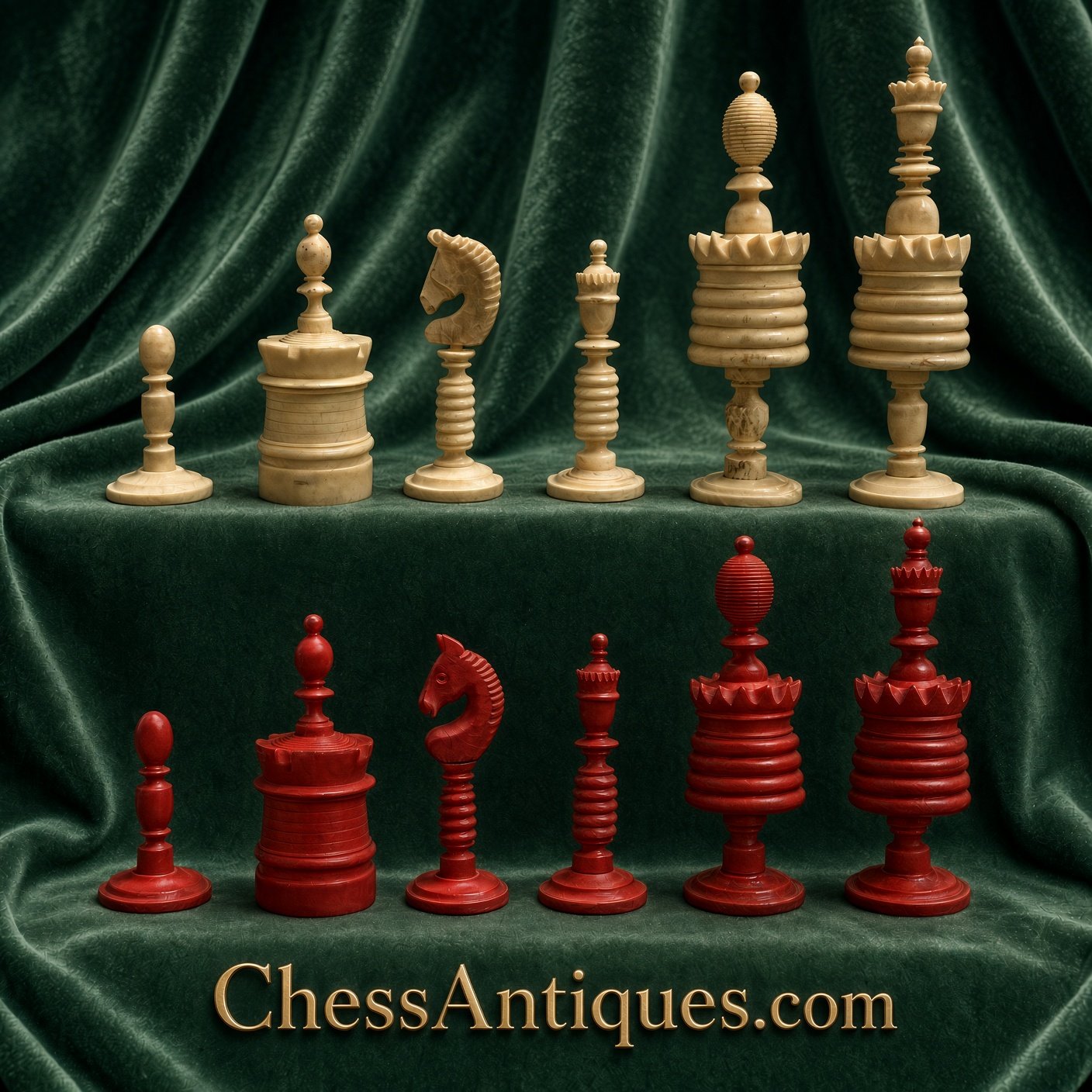
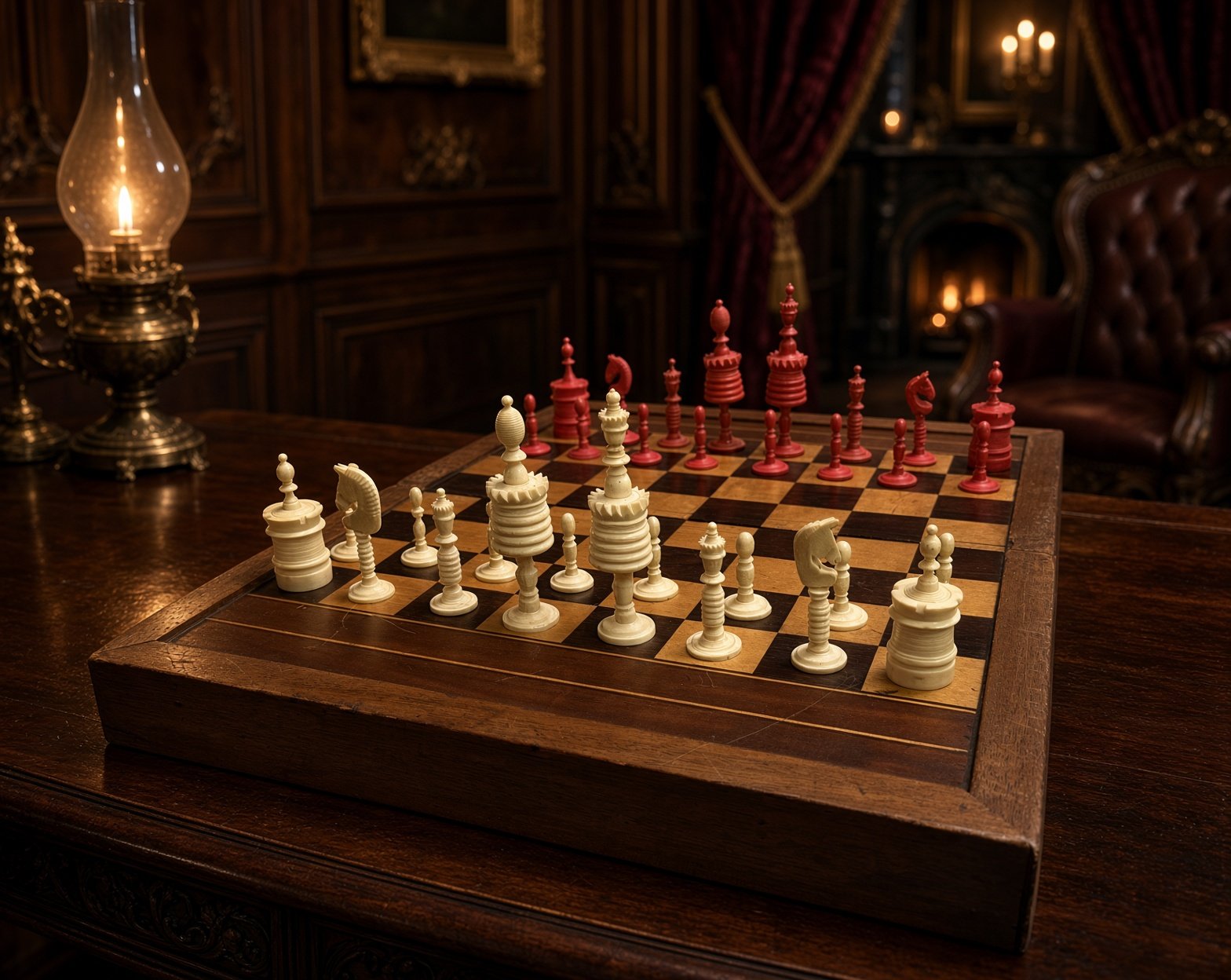
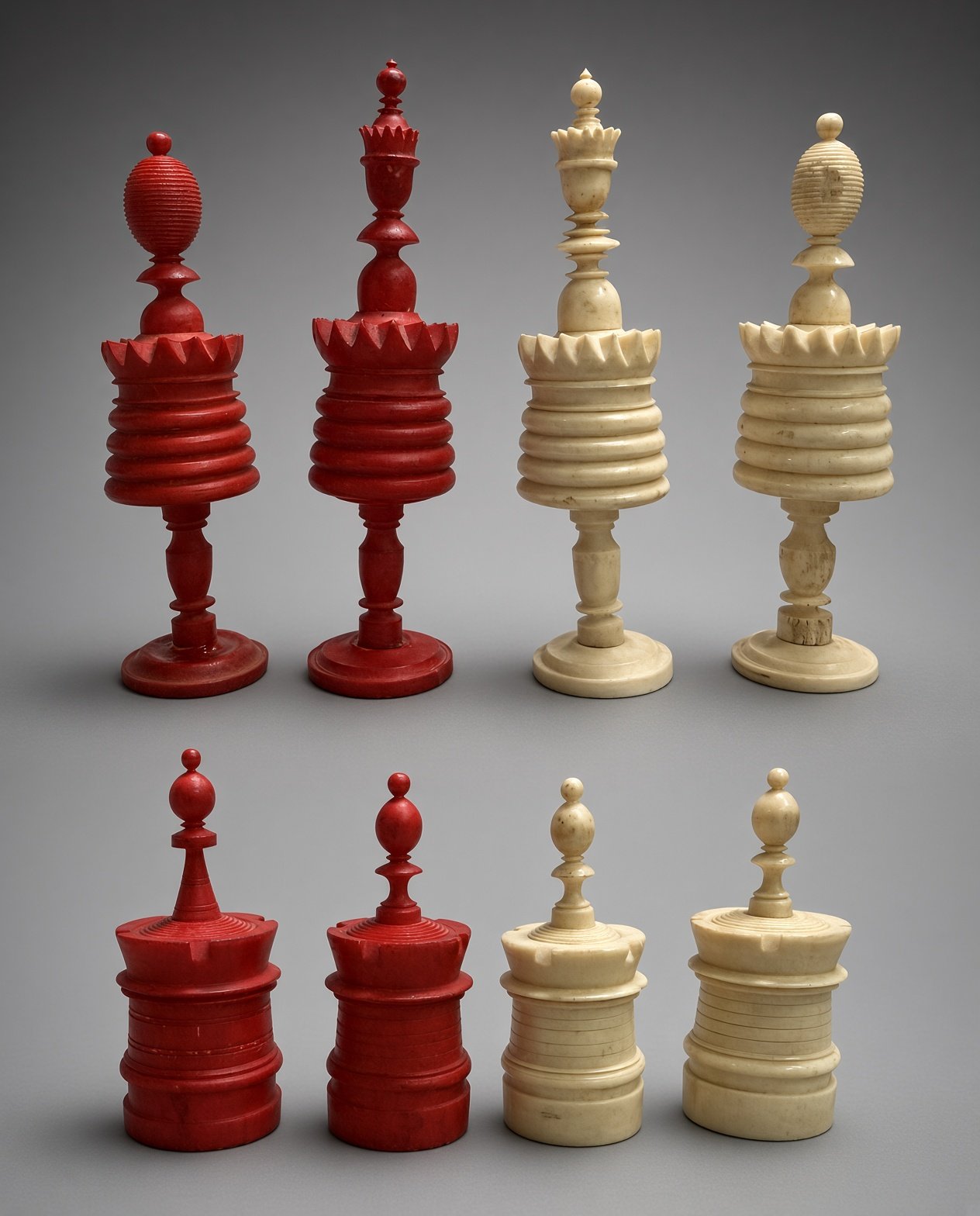
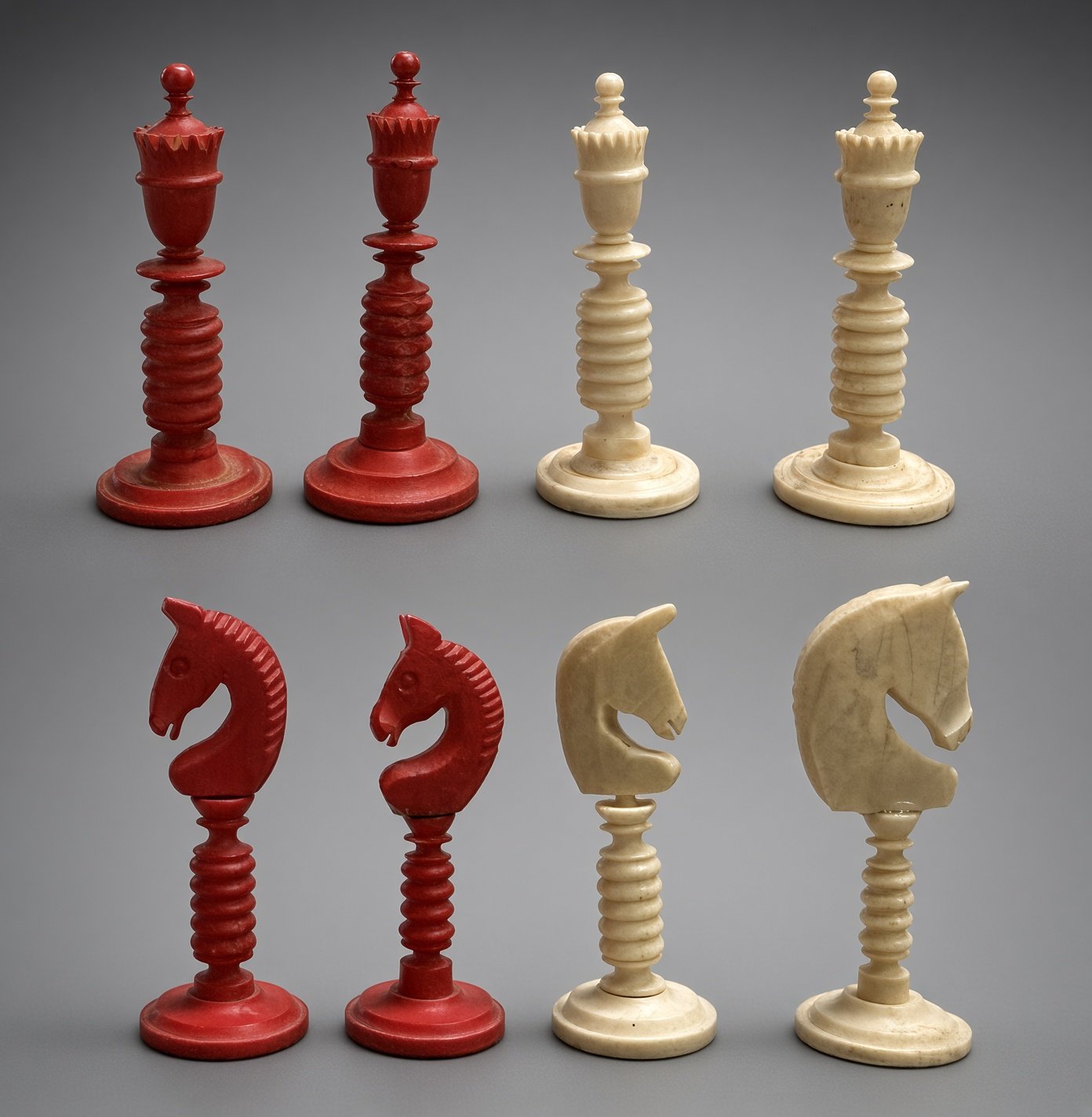
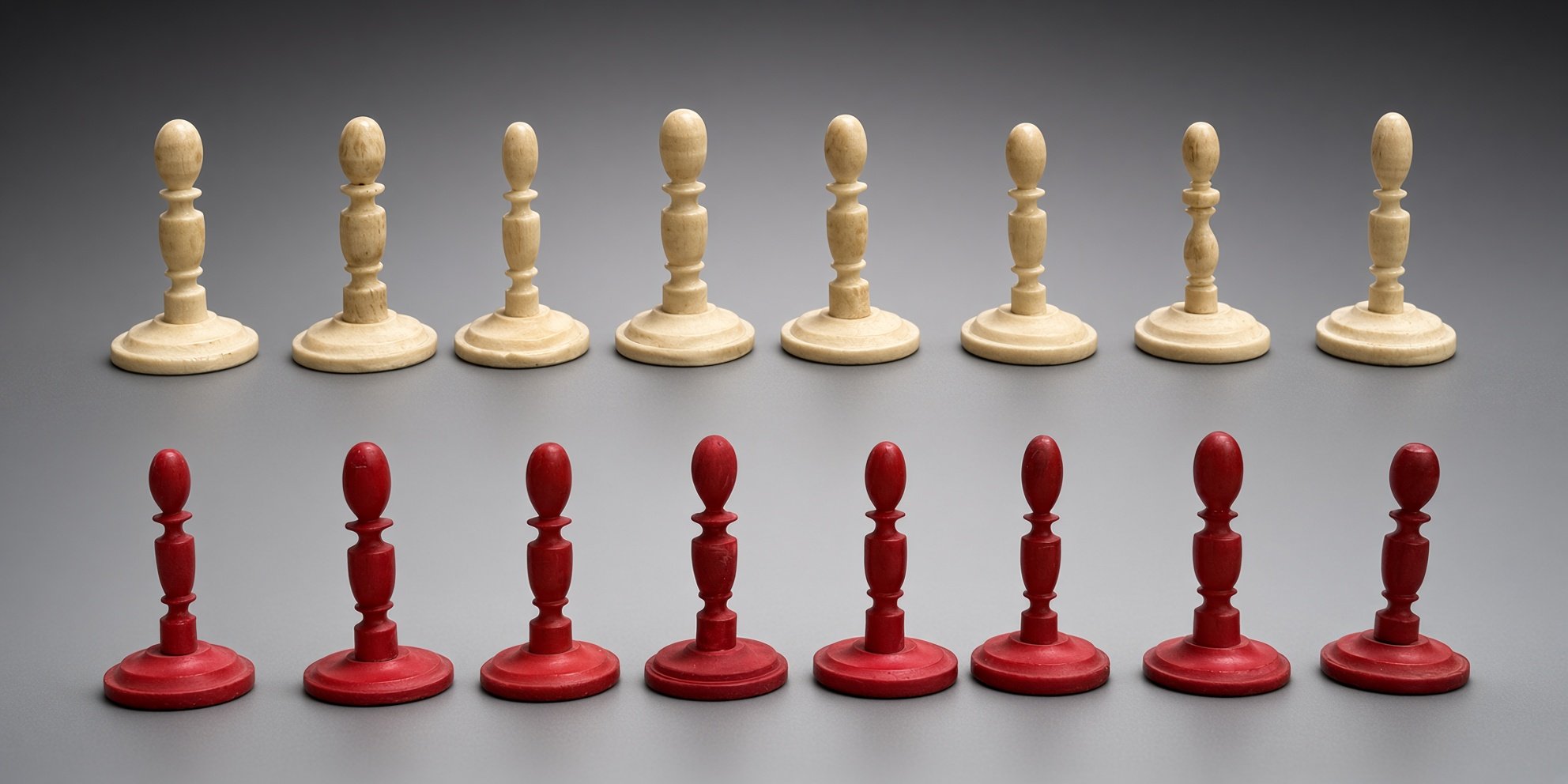
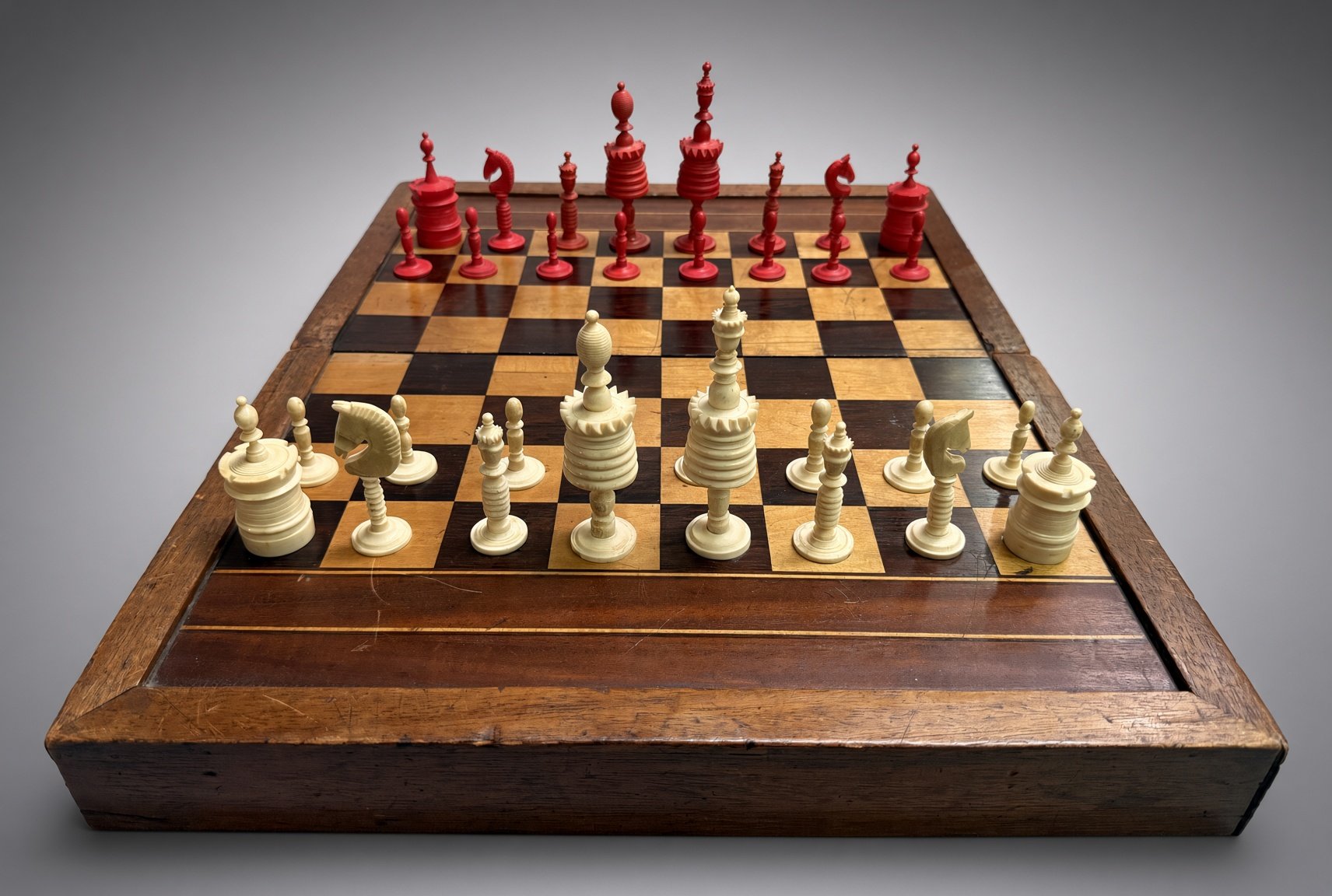
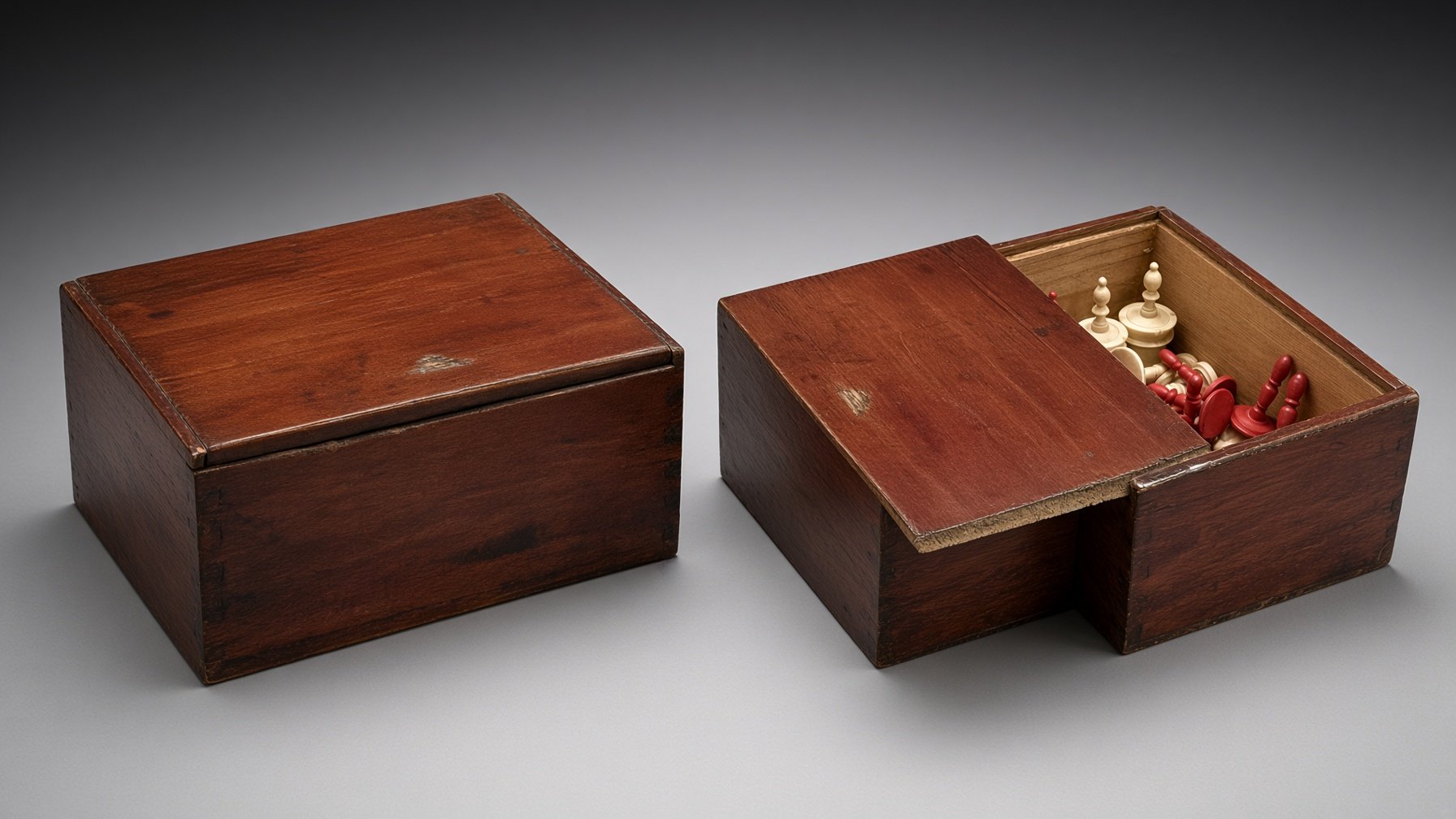
Offered here is a set of very early Type I English Bone Barleycorn Style Chessmen, with simple turned ringed features Pieces. The Type I Bone Barleycorn Chess pieces are all mounted atop circular ringed stems with simple circular bases. The chessmen are fabricated from natural and Cochineal-stained bone. True Barleycorn style chessmen have broad barrel-bodied Kings and Queens, and are normally fabricated from bone, rarely ivory. This King stands 4-0″ tall with a 1-0″” diameter base. The Rooks are broad, reticulated towers with cogged rings and tapered staffs surmounted with a ball finial. The chessmen are housed in a period Mahogany slide-top box, possibly original to the set. The chessmen are in very good condition. The set was produced in the U.K. around 1820.
This example remains in very good condition and represents an excellent opportunity to own an authentic early 19th-century English chess set. A distinctive piece of chess history from the pre-Staunton era.
Type I Bone Barleycorn chessmen first appeared at the end of the 18th century and were produced in the United Kingdom and Central Europe throughout the 19th century. While popular in their time, the design was eventually superseded by the more stable and practical Staunton pattern introduced in 1849.
Short History
The term Type I Bone Barleycorn Chessmen is used to describe a range of Barleycorn designs which feature plain ringed bodies on the Kings and Queens. The Queens frequently sport a large, reticulated plume headpiece. The Kings can have a number of headpiece configurations, normally fluted and surmounted by a reticulated sphere. Rooks are normally stout towers, often sporting tapered staffs with or without flags. Bishops, Knights and Pawns are headpieces mounted atop baluster pedestals. The Type I Barleycorn chess sets probably first appeared at the end of the 18th century. and were manufactured in the U.K. and Central Europe throughout the 19th century.
The ubiquitous Barleycorn design suffered from instability and fragility. Other common complaints were that the size of the Royal pieces often obscured the view of the other chessmen during play. (Needless to say, these sets were not conducive to Blitz Chess!) The Type I Bone Barleycorn chess sets were in common use through the early 20th Century. Despite its early popularity, the design was quickly replaced by the now standard Staunton chessmen, first offered in September of 1849. The new Staunton chessmen proved to be much more stable, durable and suitable for practical play.
Cochineal Dye. To create the red dye, Carminic acid is extracted from the female cochineal insects and is treated to produce carmine, which can yield shades of red such as crimson and scarlet. The body of the insect is 19–22% carminic acid. The insects are processed by immersion in hot water or exposure to sunlight, steam, or the heat of an oven. Each method produces a different color that results in the varied appearance of commercial cochineal. It takes about 80,000 to 100,000 insects to make one kilogram of cochineal dye.