
Description
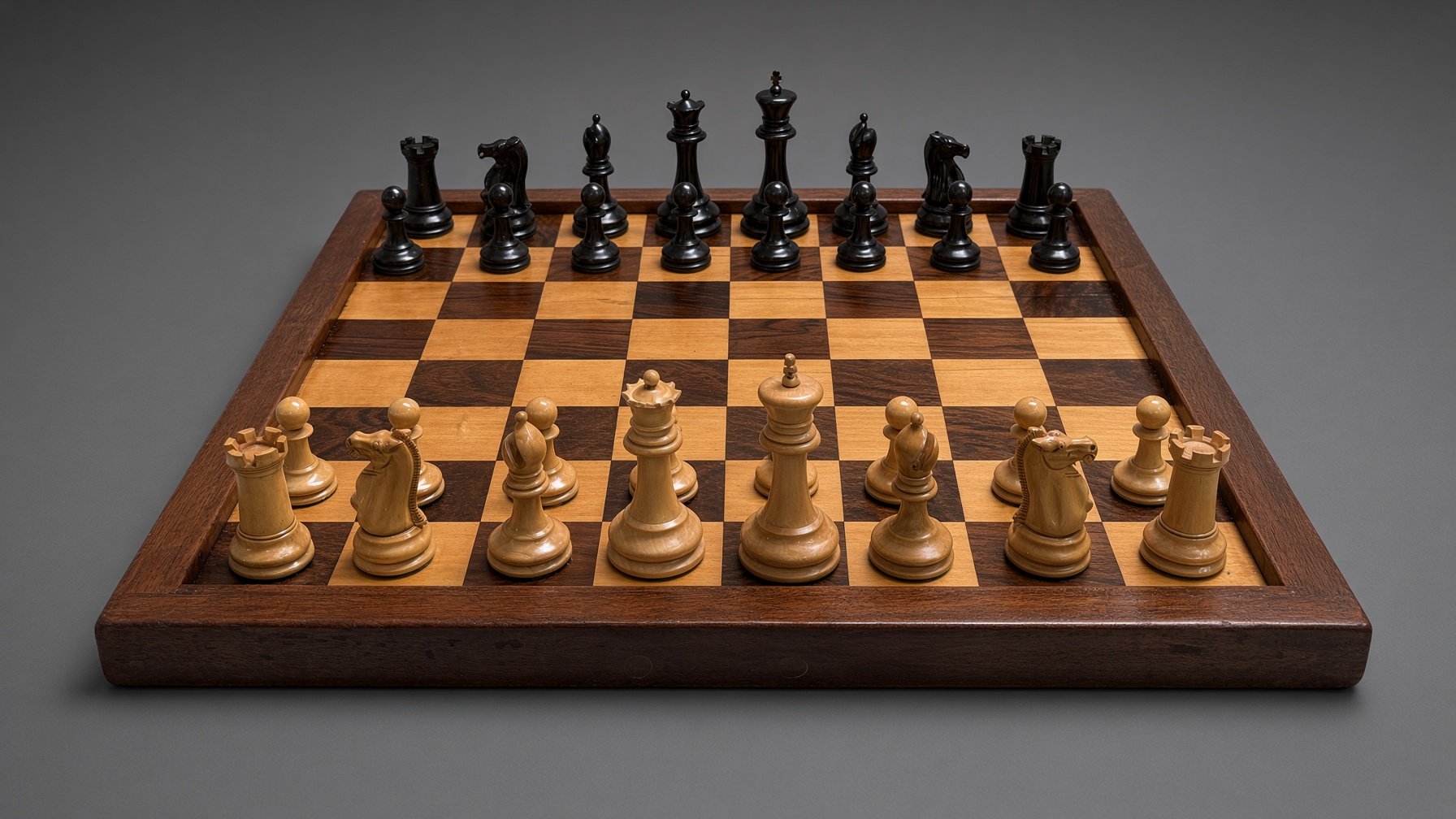
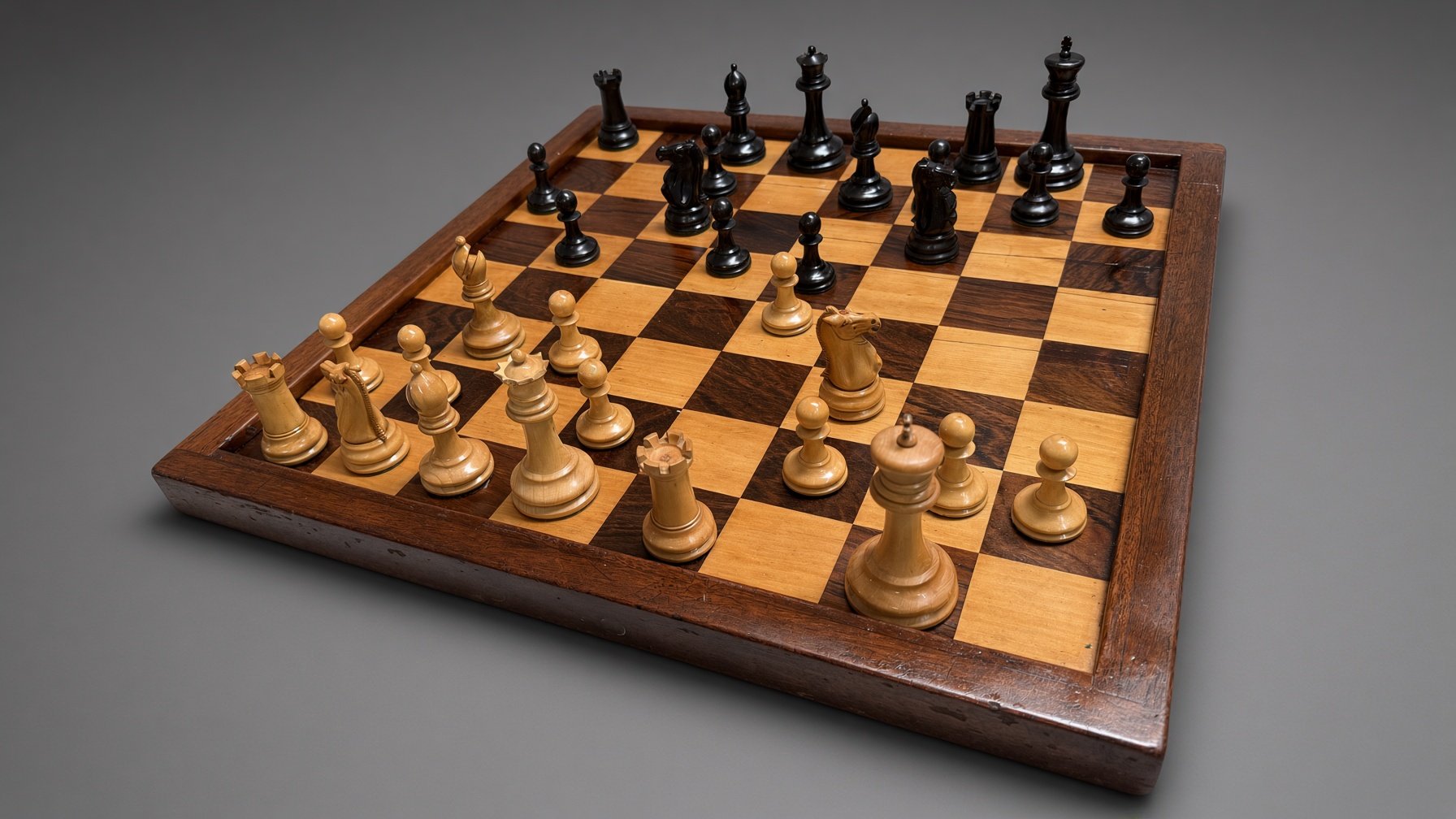
Jaques Small Club Size Lasker Chessmen,, Circa 1890.
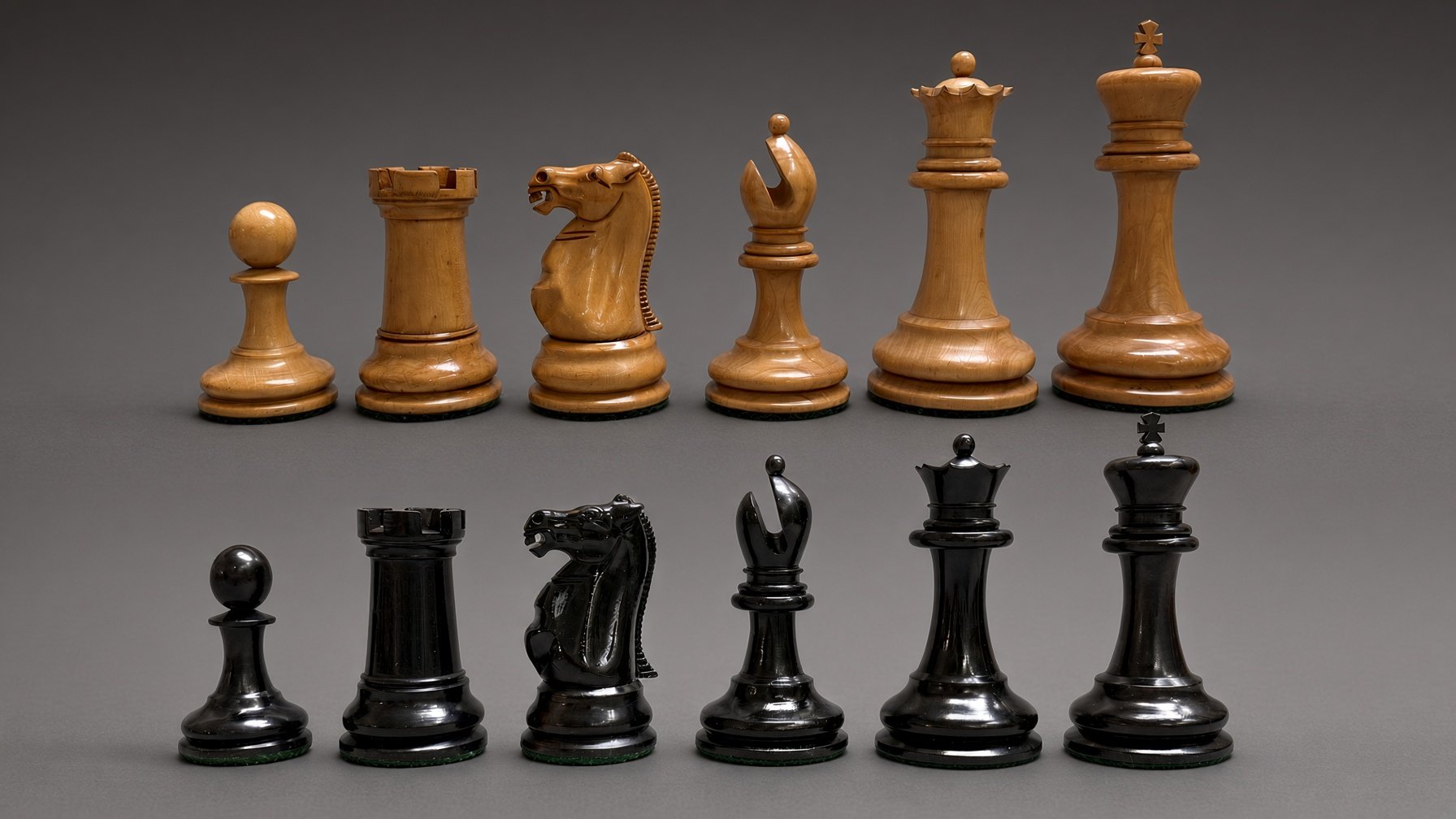
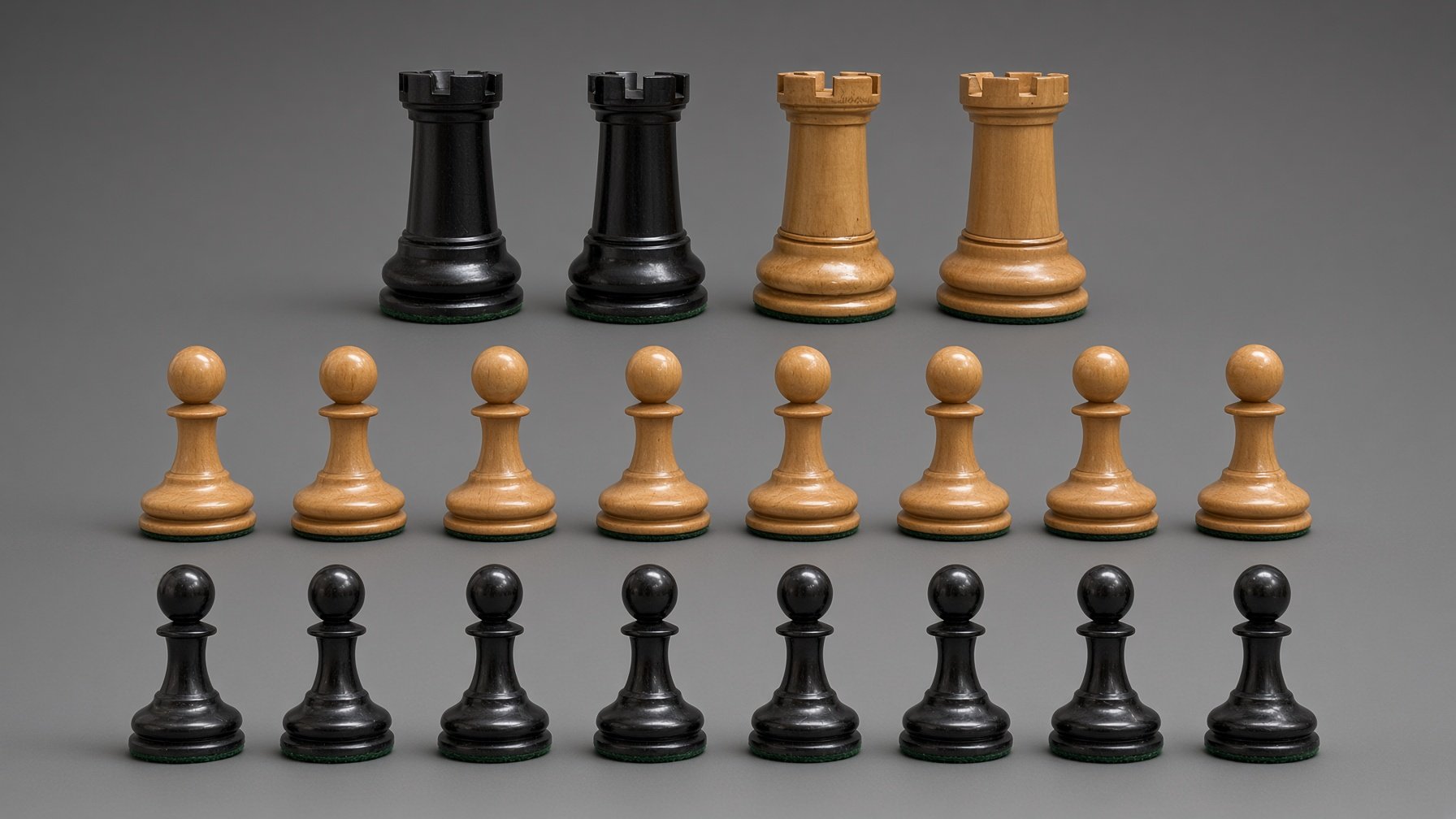
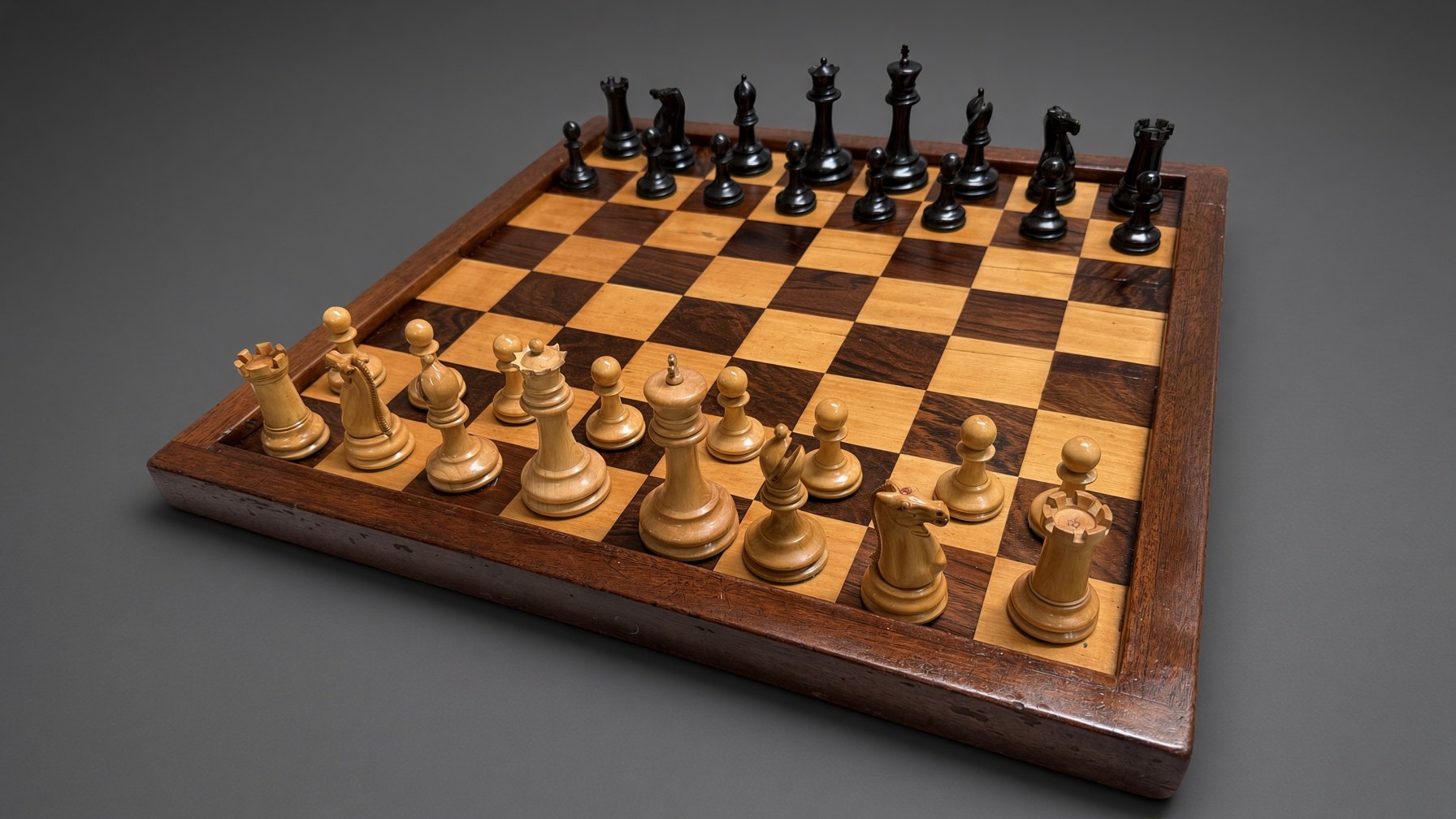
Offered here is a fine set of later Jaques Small Club Size Lasker Chessmen, circa 1890. Crafted in boxwood and ebony, the King stands 4-0″ tall with a 1.8″ diameter base. These authentic Staunton chess pieces are nicely weighted and rest atop green English baize.
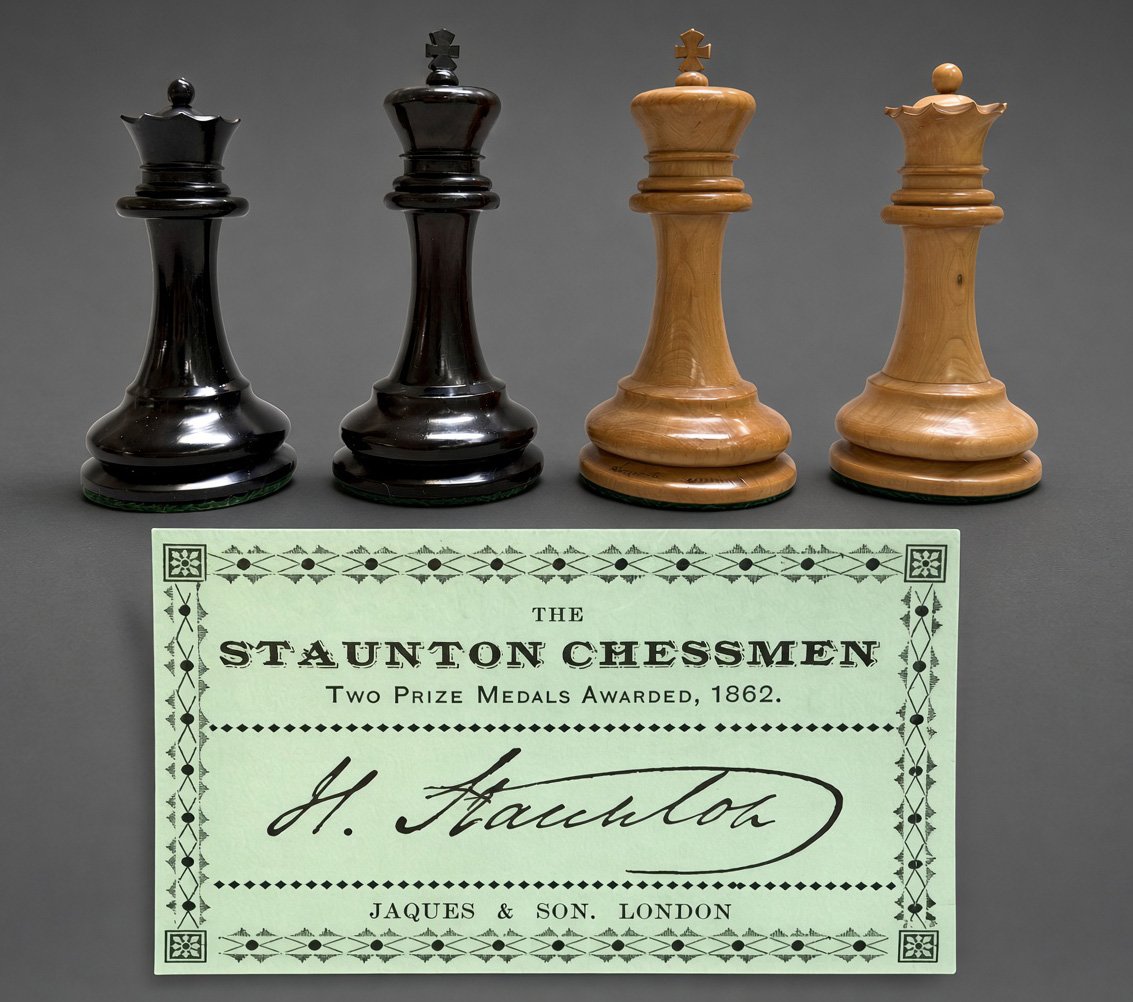
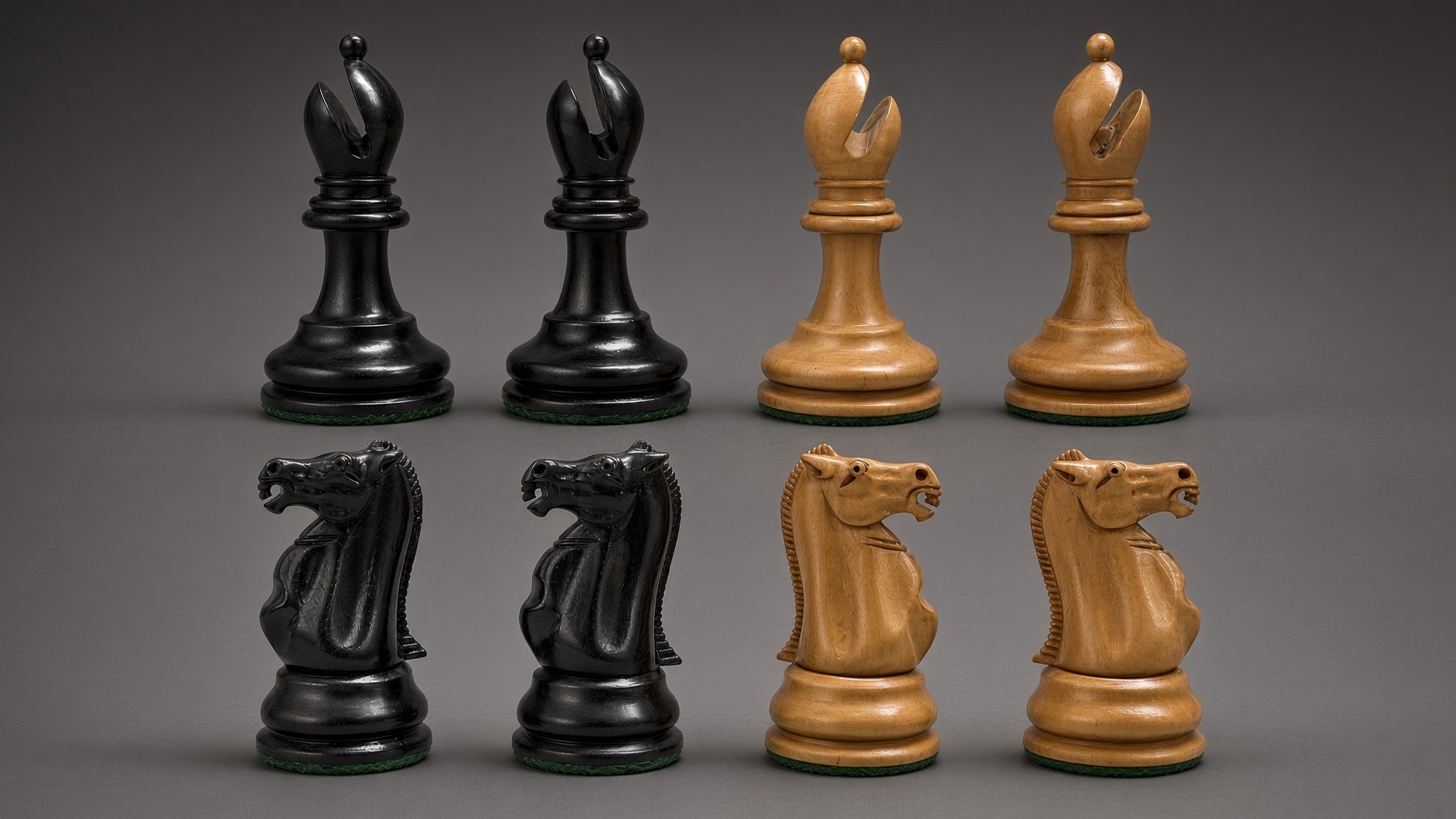
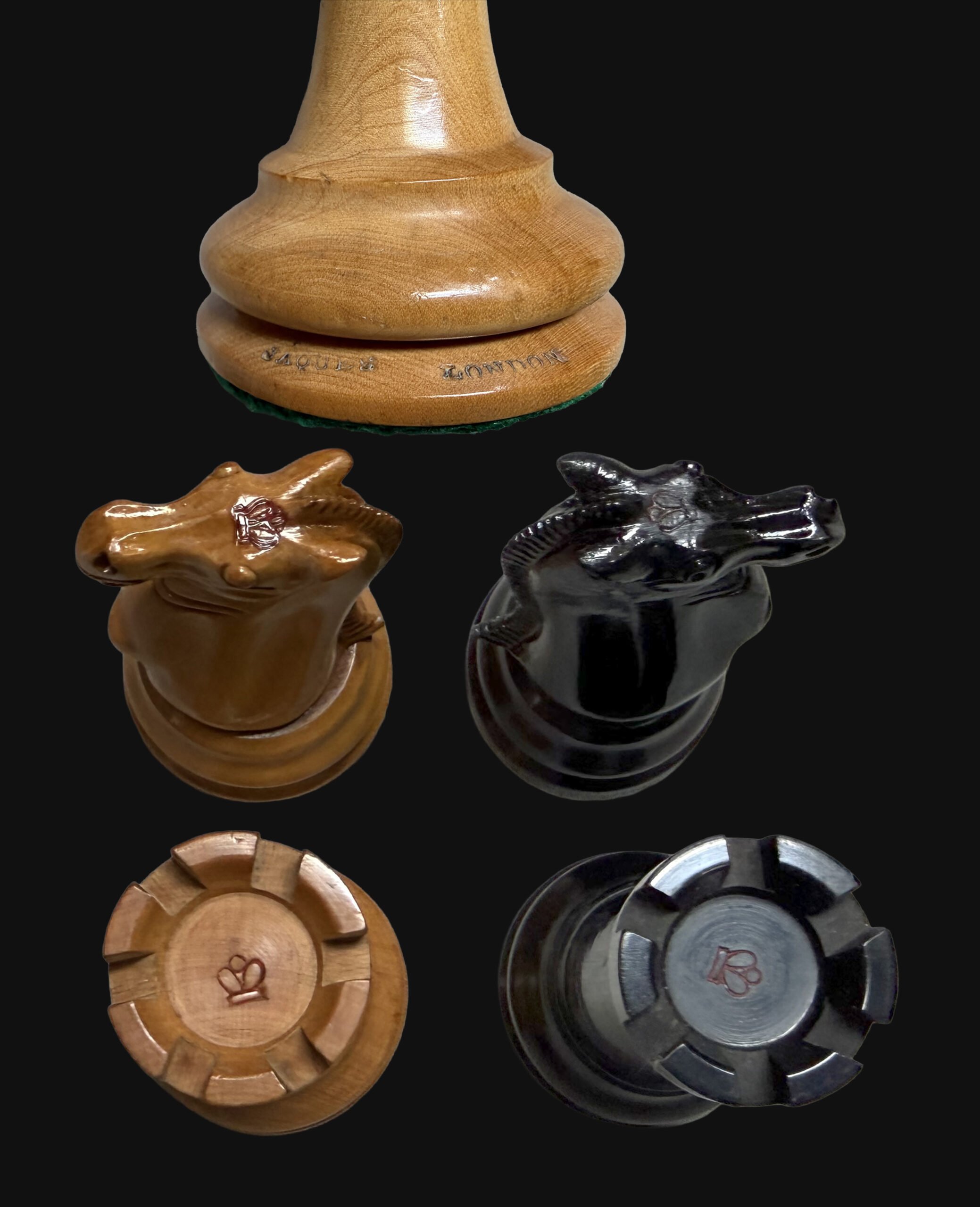
The knights are of the later Lasker style, featuring the refined Hartston-style carving. Only the White King is stamped “Jaques London” on the rim of the base, while the Kingside Rooks and Knights carry the red King’s crown mark on their summits. This combination of features places the set in the later production period of the Lasker style (roughly 1880 to the early 1890s). The 4-0″ King height is the classic “Small Club Size.”
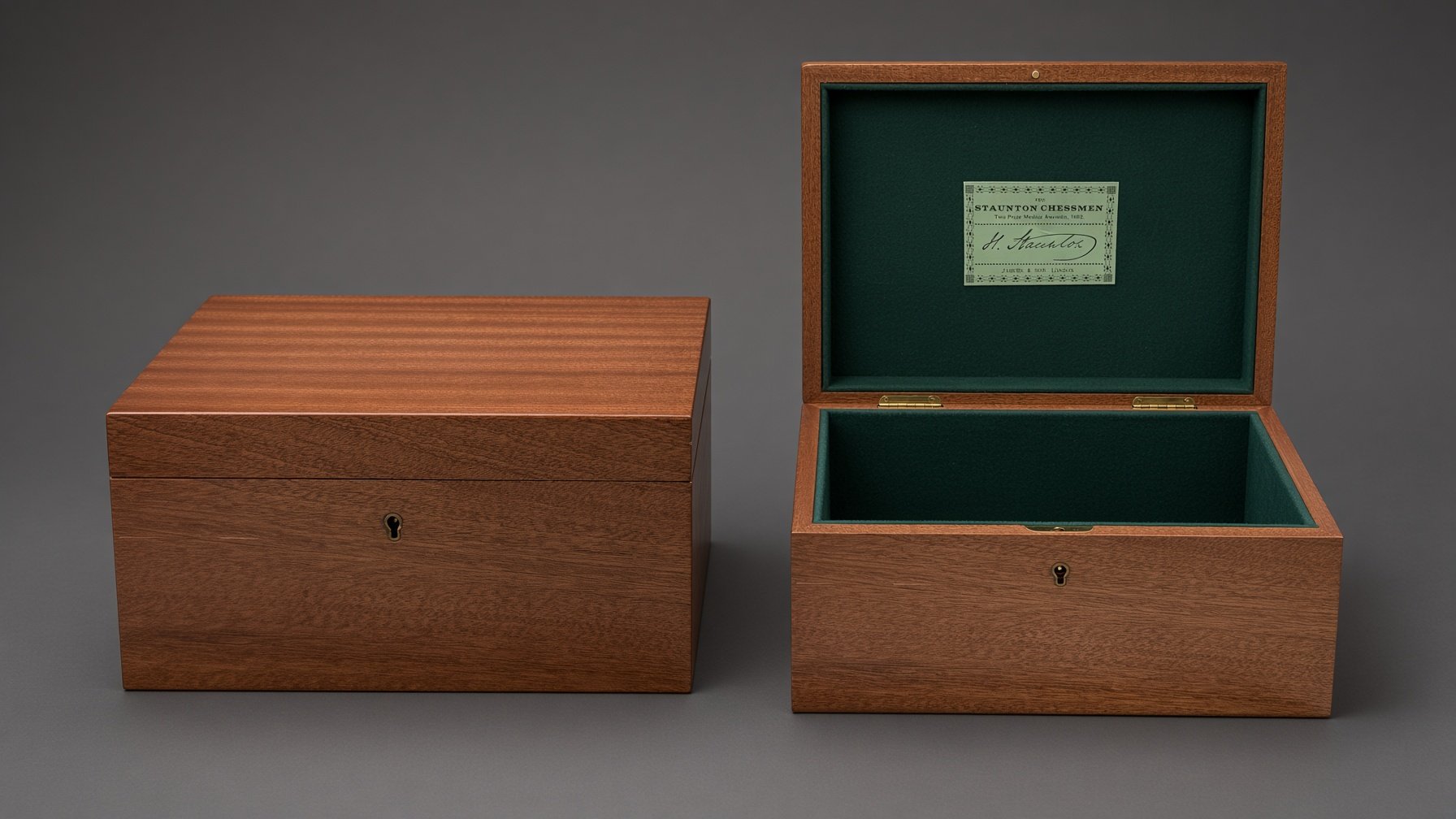
The chessmen are in excellent condition and play and display best on a chessboard with 2-1/4″ or 2-3/8″ squares. They are housed in a high-quality Italian-made reproduction of the original undivided mahogany hinge-top box, complete with an accurate facsimile of the green Jaques manufacturer’s label.
Key Features
- Later Jaques Lasker style with Hartston knights
- Small Club Size (4-0″ King)
- Boxwood and ebony, weighted with green English baize
- White King stamped “Jaques London”
- Kingside pieces marked with red King’s crown
- Excellent condition
- Reproduction mahogany hinge-top box with facsimile label
The Lasker style sets were produced in the between 1880 and the early 1890s. Sets with both Kings stamped, were from the later production runs. The chessmen are in excellent condition. These chessmen play and display best on a chessboard with 2-1/4″ or 2-3/8″ squares.
The Jaques chessboard shown is not included as part of this sale, but an appropriate chessboard is available. For a complete selection of our finest new and antique chessboards, please click here. For a short history of the John Jaques Company and the Staunton Chessmen, click here. Some interesting historical articles about chessmen and collecting can be found here.
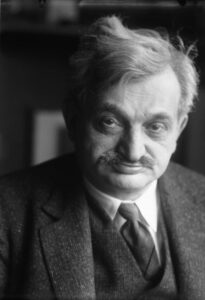
Emanuel Lasker was a German Chessplayer, mathematician, and philosopher. He held the World Chess Championship for 27 years (from 1894 to 1921). In his prime, Lasker was one of the most dominant champions and is still generally regarded as one of the World’s strongest players. Lasker was considered to have a “psychological” method of play in which he considered the subjective qualities of his opponent, in addition to the objective requirements of the position. Lasker was well ahead of his time and used a more flexible approach to the position than his contemporaries.
Emanuel Lasker was born in Berlinchen, Germany on 24th December 1868. As a child Lasker displayed a talent for both chess and mathematics. At age 11, Lasker attended a school in Berlin to develop his mathematical skills, and he later went on to study mathematics at Erlangen University.
Lasker’s record in match play was impressive. He won all his matches from 1889 to 1893. By the mid-1890s, Emanuel Lasker was clearly the World’s strongest player. In 1894, Lasker challenged Steinitz for the world championship. Lasker went on to win the match ten wins to five with four draws and, at age 25, Lasker became world champion Lasker was to retain the world champion title for a record 27 years.
Between his 1896–97 World Championship re-match with Steinitz and 1914, Lasker has three convincing defenses of his title. Lasker was in his early 50s when he finally lost the world championship to Capablanca and effectively retired from serious chess.
During the war Lasker was forced to flee Germany. He was now penniless. In 1934, at the age of 65, finances forced Lasker to return to chess. In August 1937, Martha and Emanuel Lasker decided to leave the Soviet Union. They moved to the United States in October 1937. While, in the United States Lasker tried to support himself by giving chess and bridge lectures and exhibitions. Lasker died of a kidney infection in New York on January 11, 1941, at the age of 72. By this time, he was a charity patient at the Mount Sinai Hospital. He was buried at Beth Olom Cemetery, Queens, New York.
