
Description
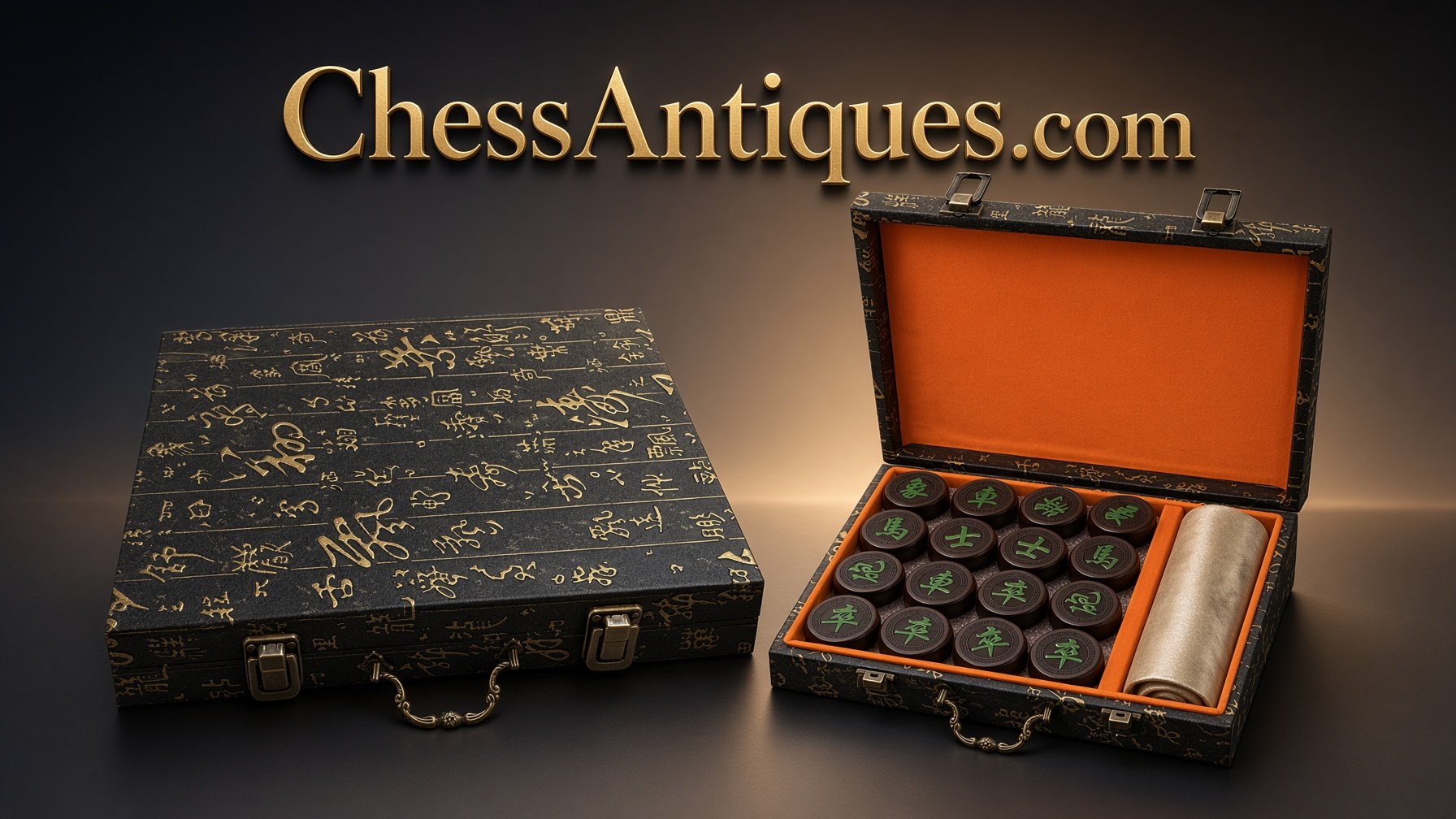
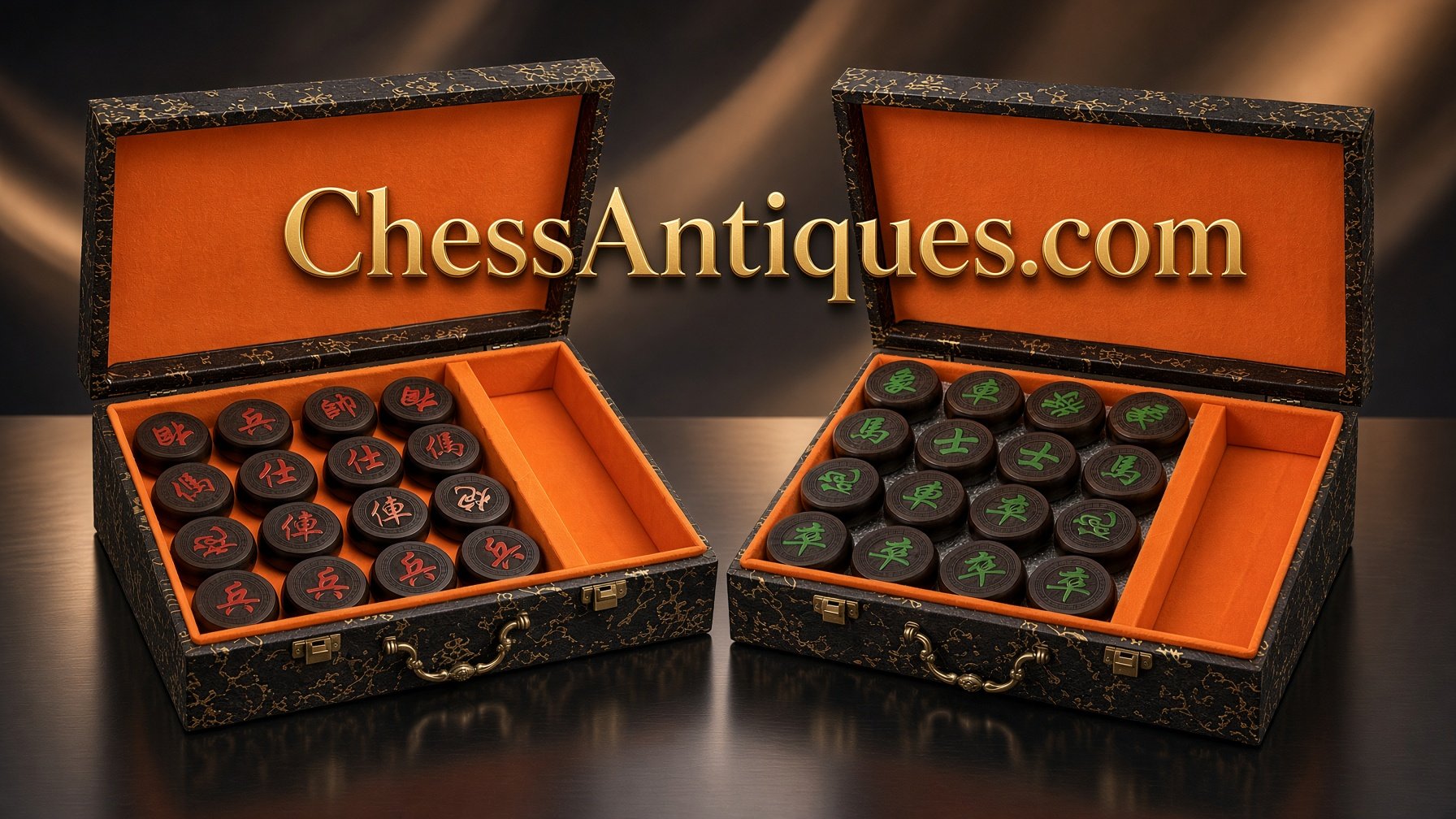
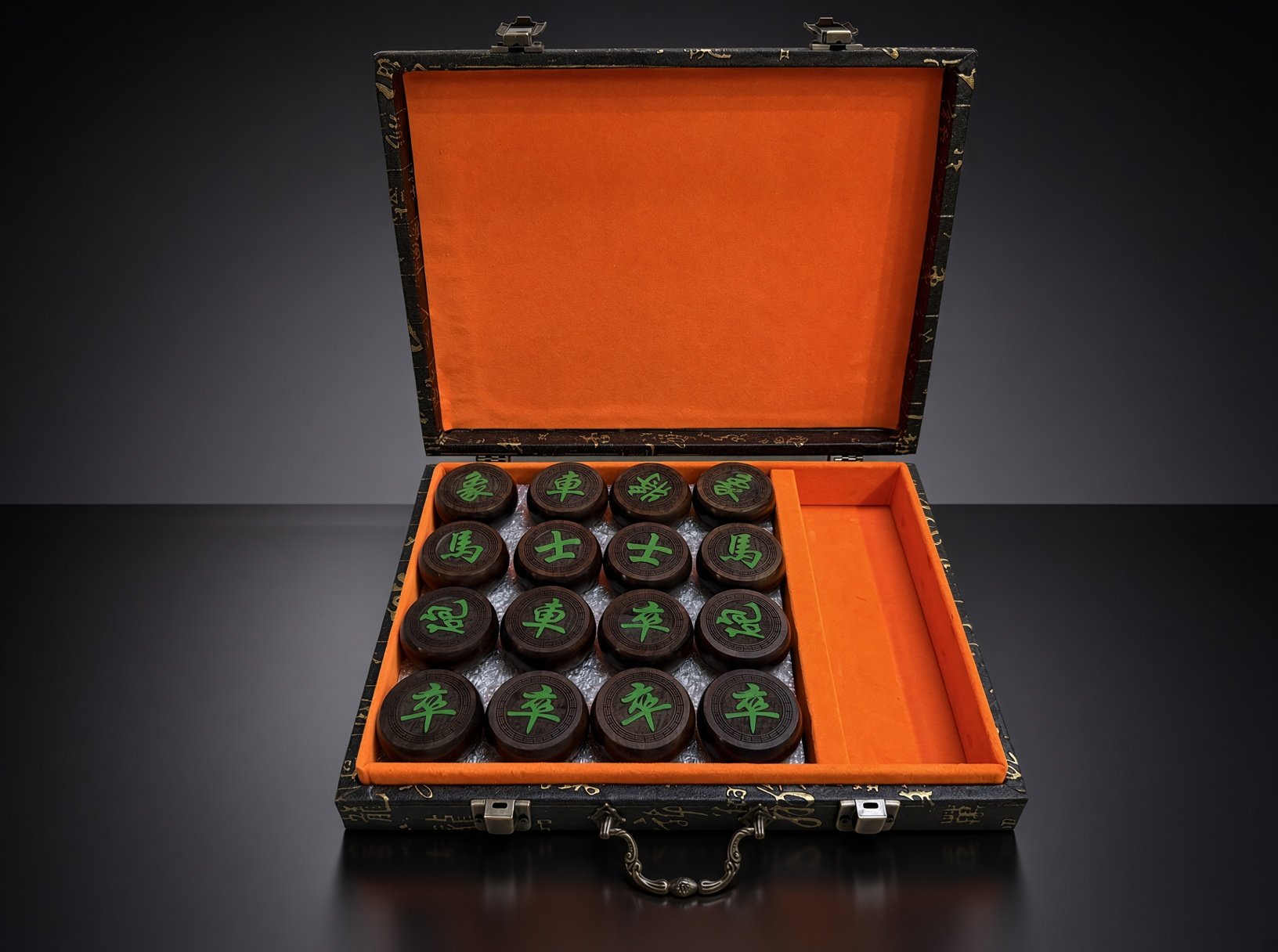
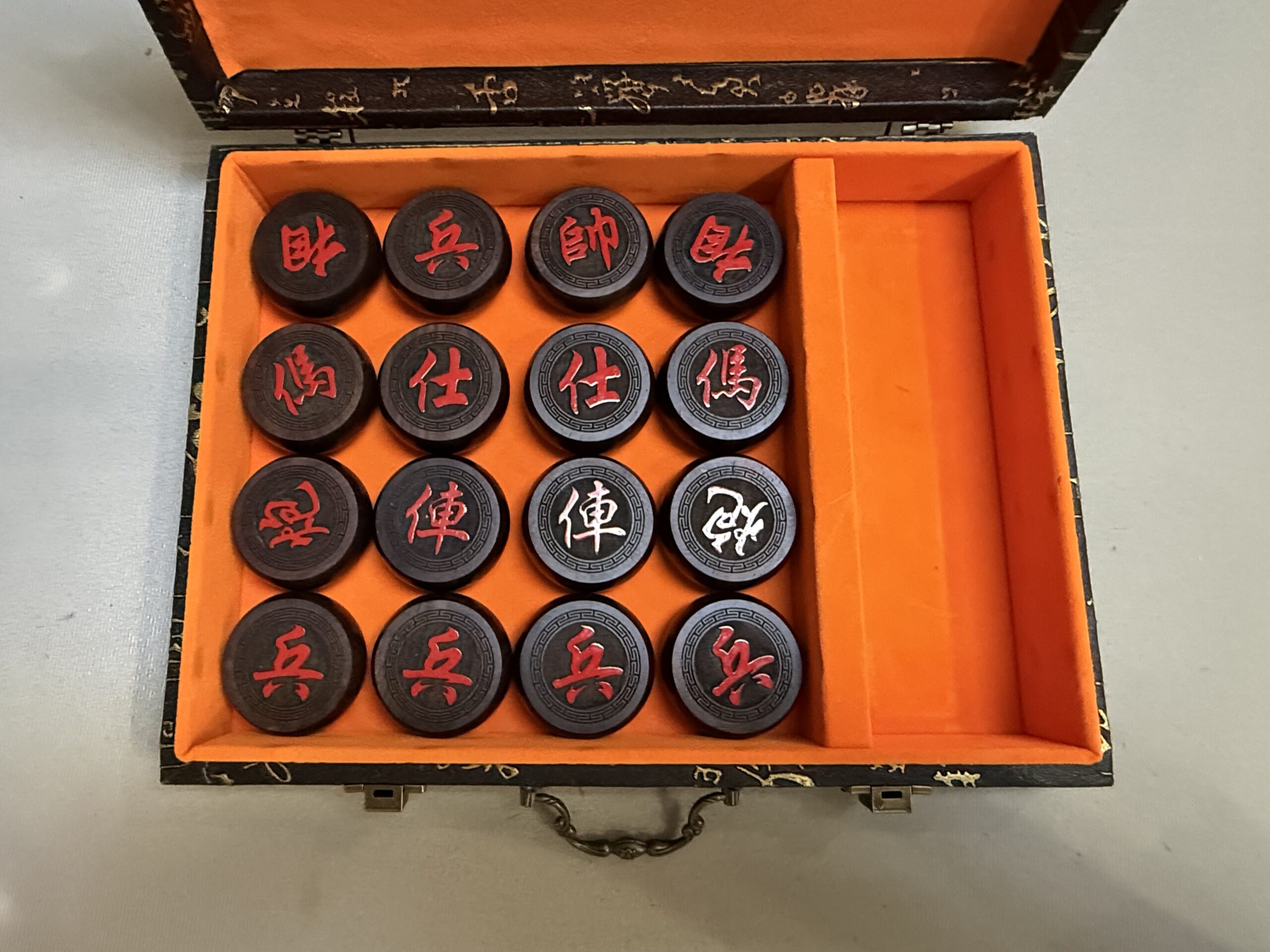
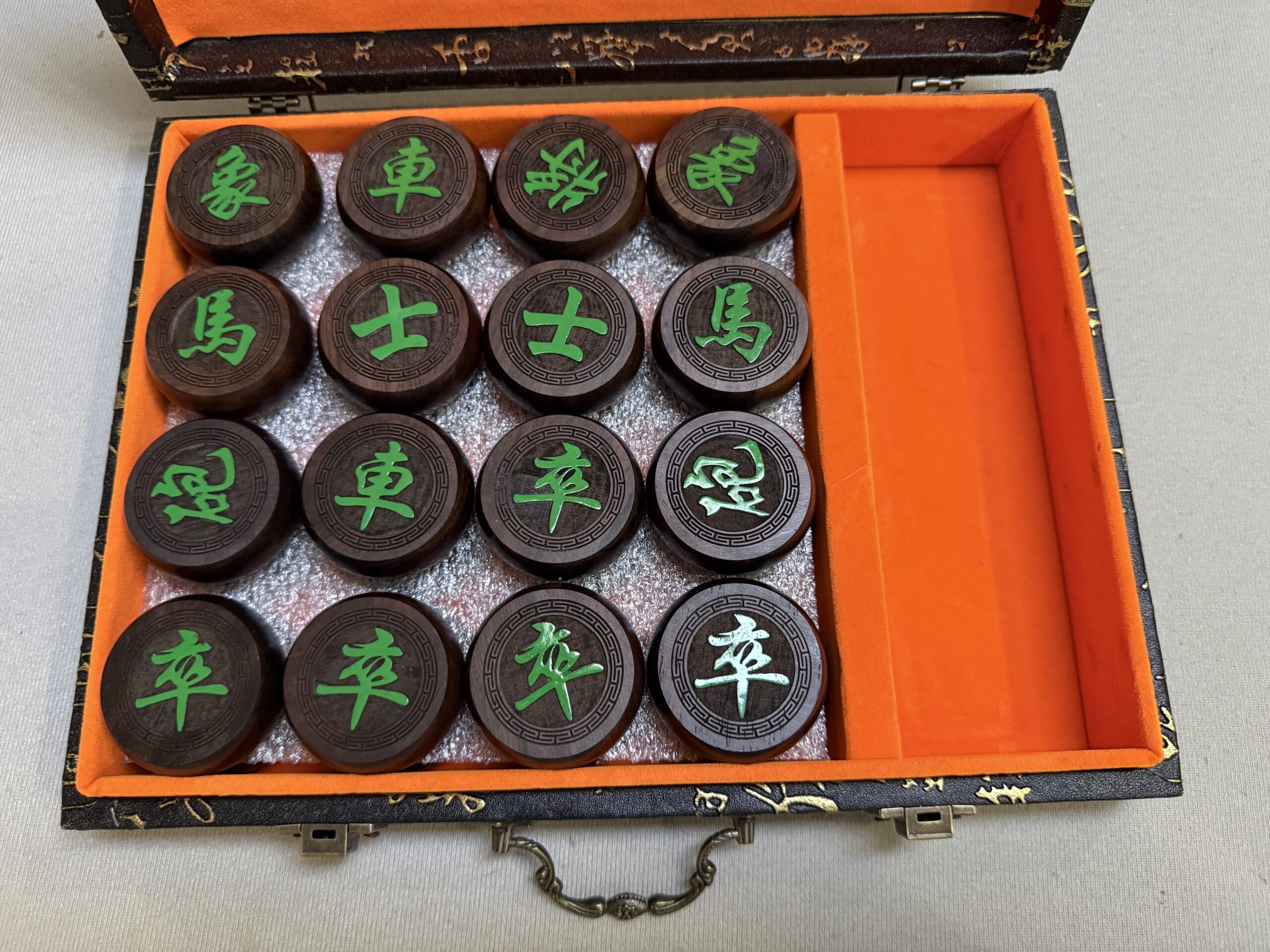
A set of Cased Ebony Xiangqi Pieces.
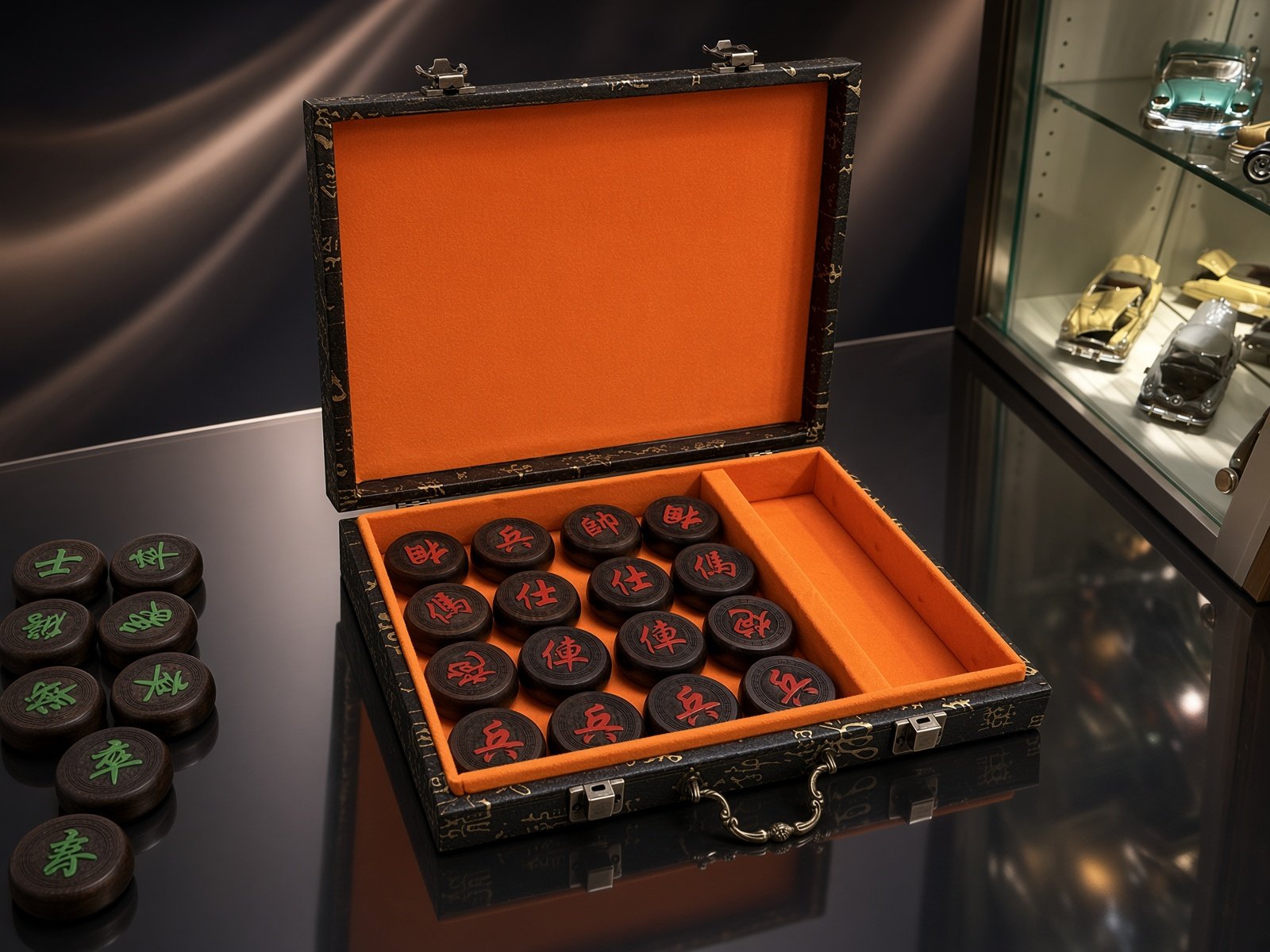
Offered is a complete set of ebony Xiangqi pieces (Chinese chess / Xiang Qi), produced in 1970. This handsome set includes 32 individual barrel-shaped chessmen, each measuring 2″ in diameter by ½″ thick. The pieces are extremely well turned from solid ebony and feature traditional Chinese calligraphy engraved in red or green on one side for clear identification.
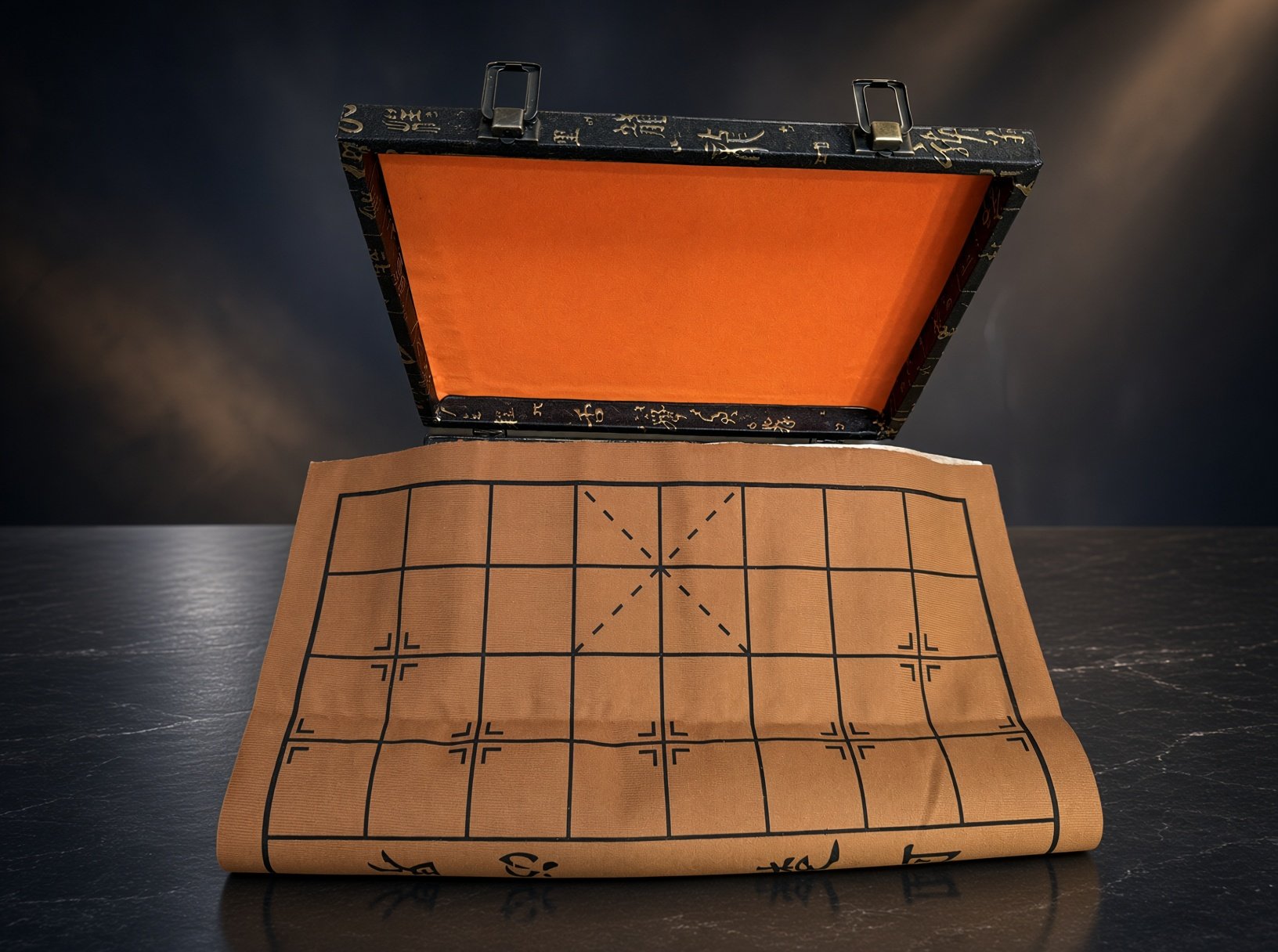
The set is housed in its original lined and embossed black leather-covered storage box measuring 12″ × 9″. A matching leather Xiangqi chessboard is also included, making this a ready-to-play or display set. Both the pieces and the case are in as-new condition.
Key Features:
- 32 barrel-shaped ebony Xiangqi pieces (2″ diameter × ½″ thick)
- Red and green Chinese calligraphy engraving
- Original lined black leather covered storage box (12″ × 9″)
- Includes leather Xiangqi chessboard
- Produced in 1970
- As-new condition
Background
Xiangqi is also known as Chinese chess. It is one of the oldest forms of chess and one of the most popular board games in China. It is related to Western Chess, Chaturanga, Shogi, Indian chess and Janggi. There are several differences between Xiangqi and Western Chess. The most significant are the new piece, the Cannon (pao), which must have a “screen” to capture; a rule forbidding the Kings (or Generals) from directly opposing each other; the ability to block the Knight, Pawn promotion; the river, which the Elephants can’t cross; and the Fortress or Palace, which confines the King and his advisors (Visors).
The battlefield is composed of 9 vertical lines (files) and 10 horizontal lines (ranks) with the pieces being played on the intersections. On the center of each edge of the board is the fortress or palace, which is 3 by 3 lines (9 points) with four diagonal lines that extend outward from the center forming an “X” shape. Dividing the two opposing sides of the board is a river, located between the fifth and sixth ranks. The river is often marked with the Chinese characters, 楚河 “Chǔ Hé” meaning “Chu River”, and 漢界 (汉界 in simplified Chinese), “Hàn Jiè”, meaning “Han border”, a reference to the Chu-Han War. Some boards have the starting points of soldiers marked with symbols.


