Description
A Luxury Onyx Xiangqi Set.
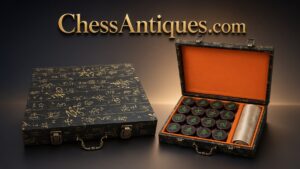
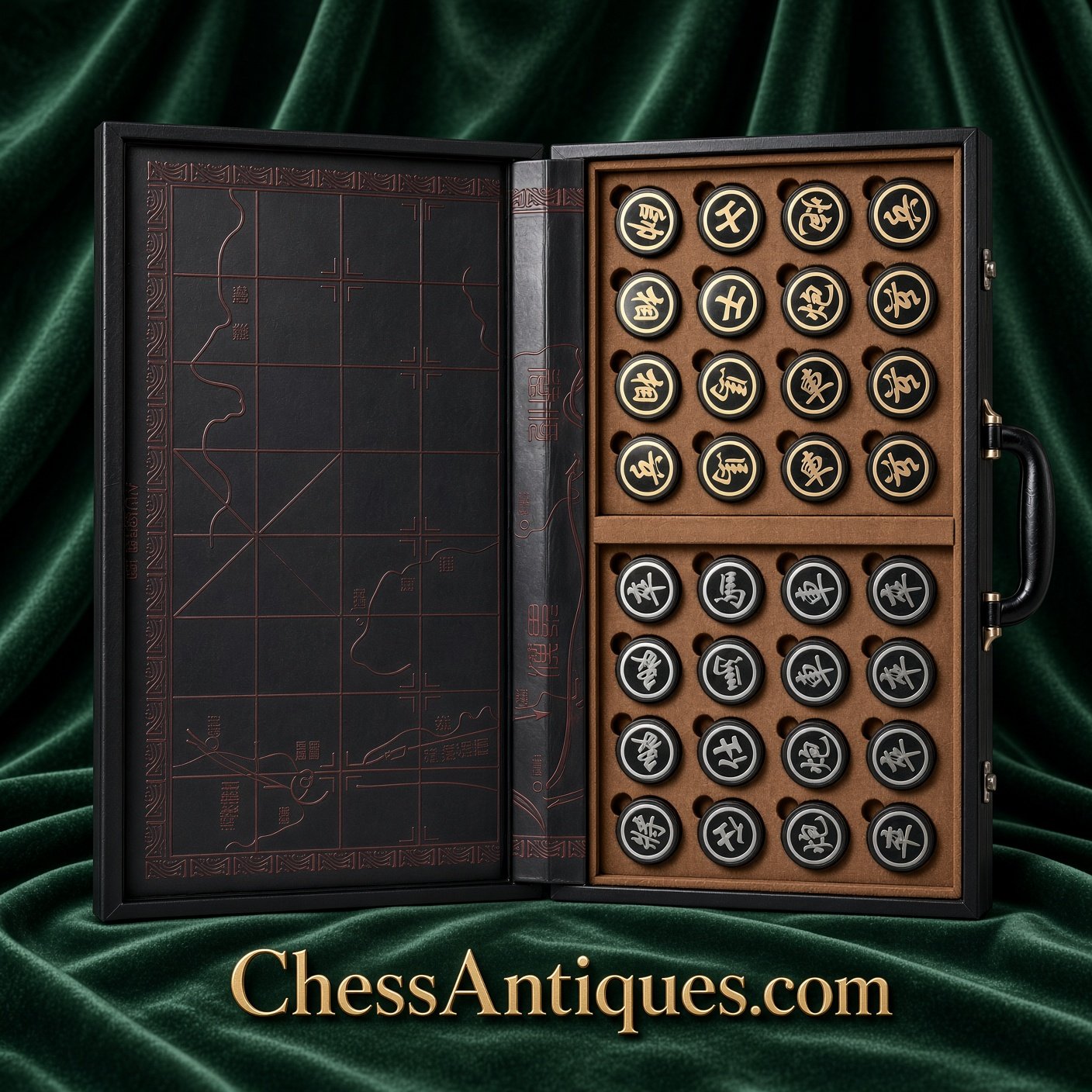
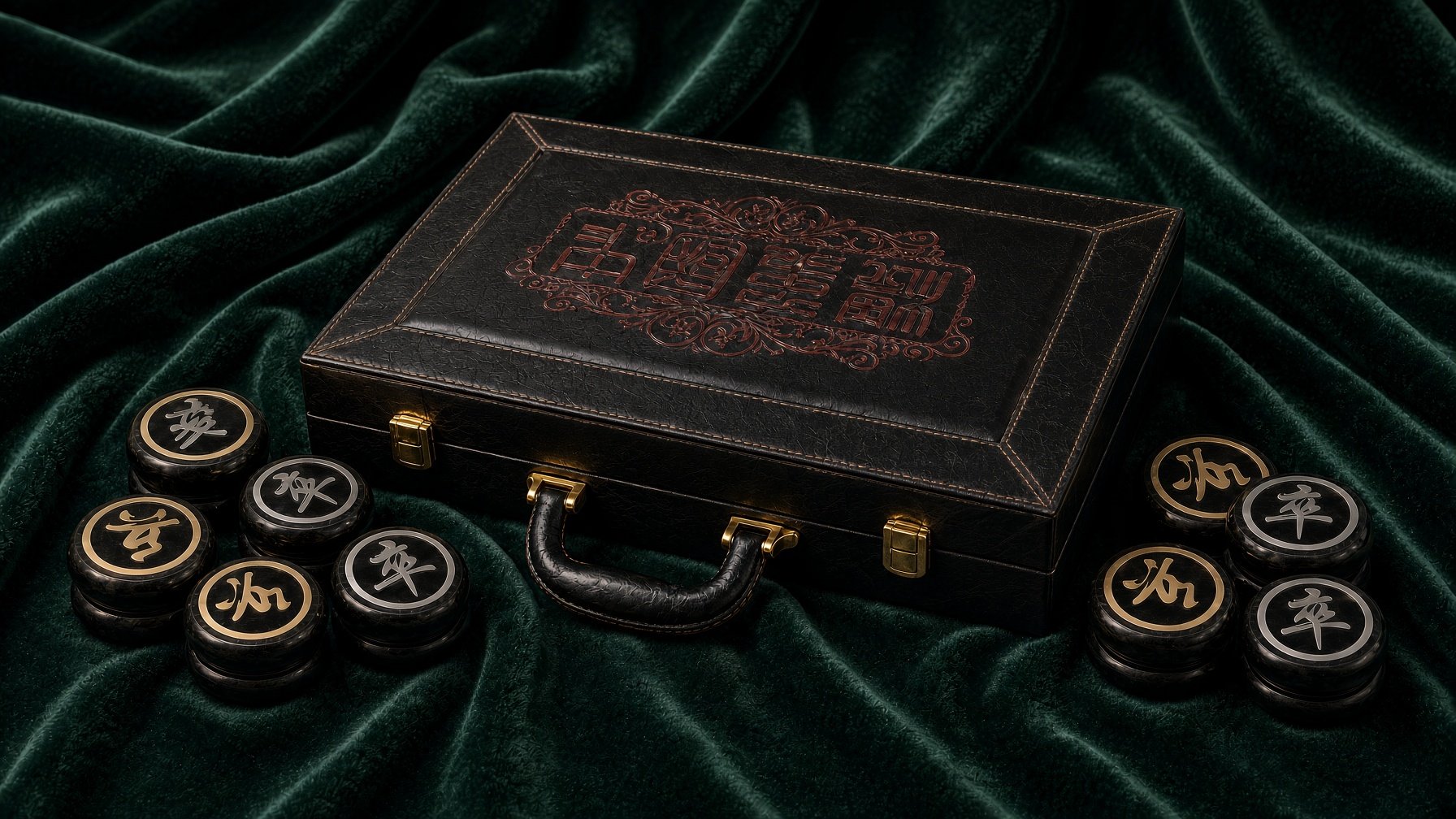
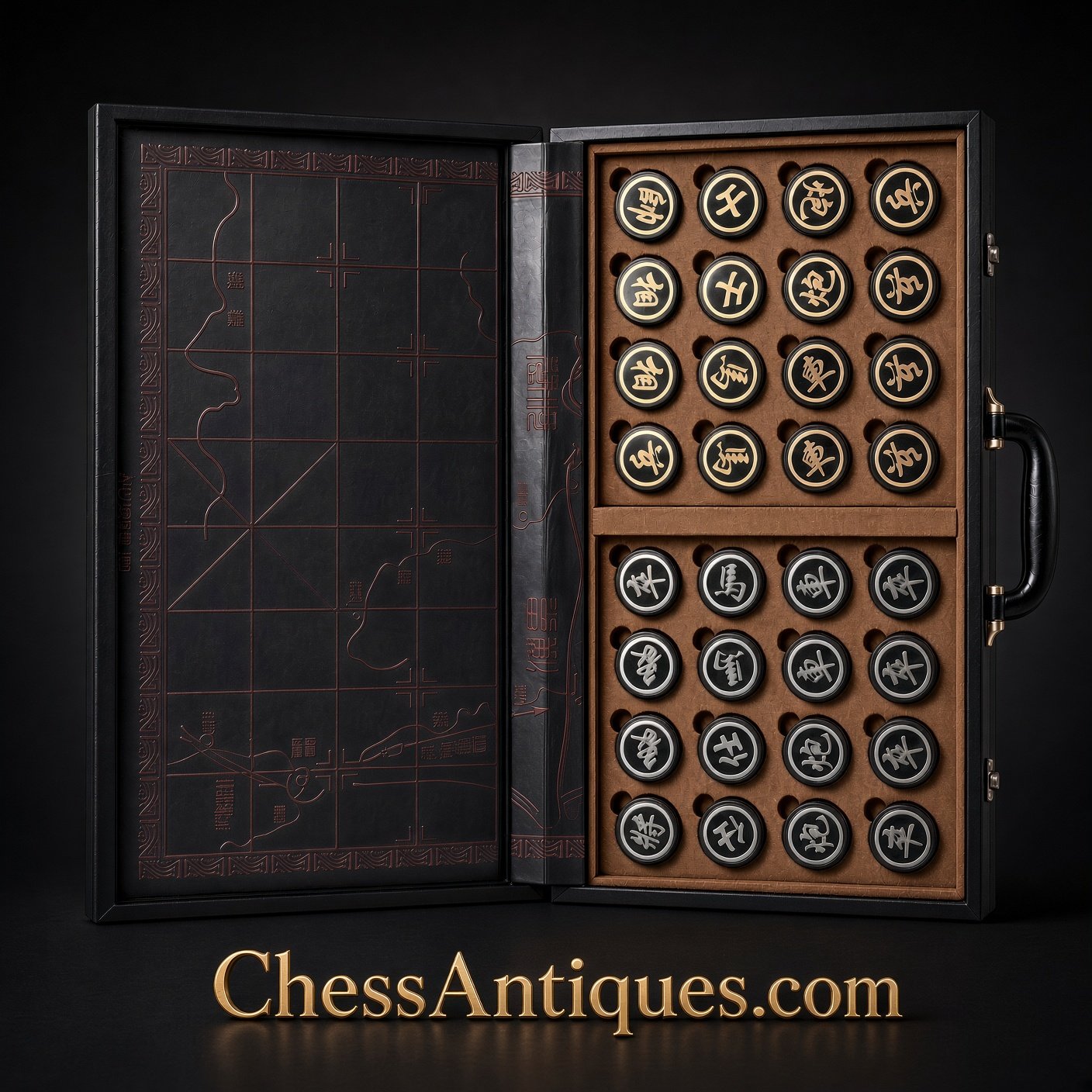
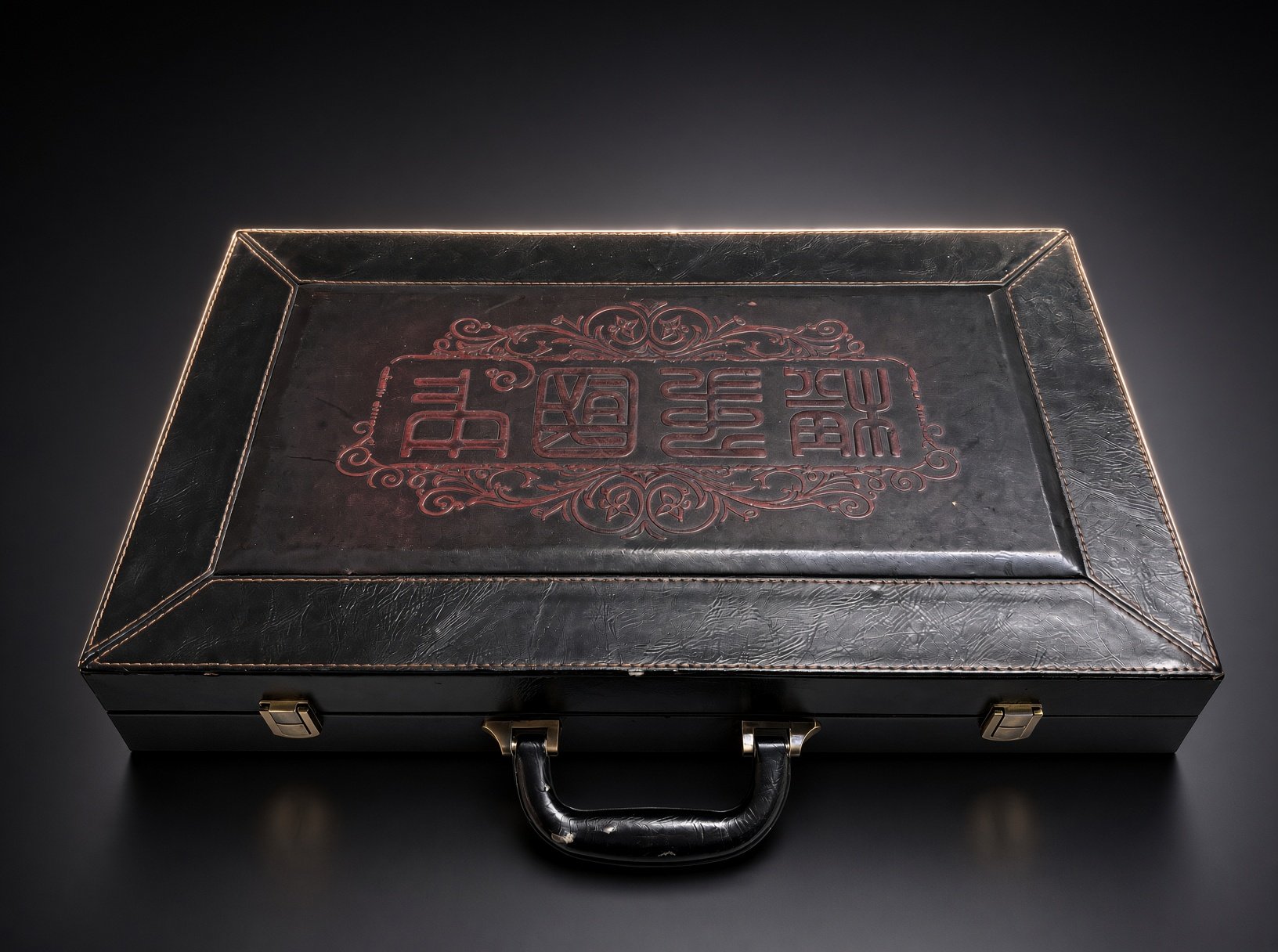
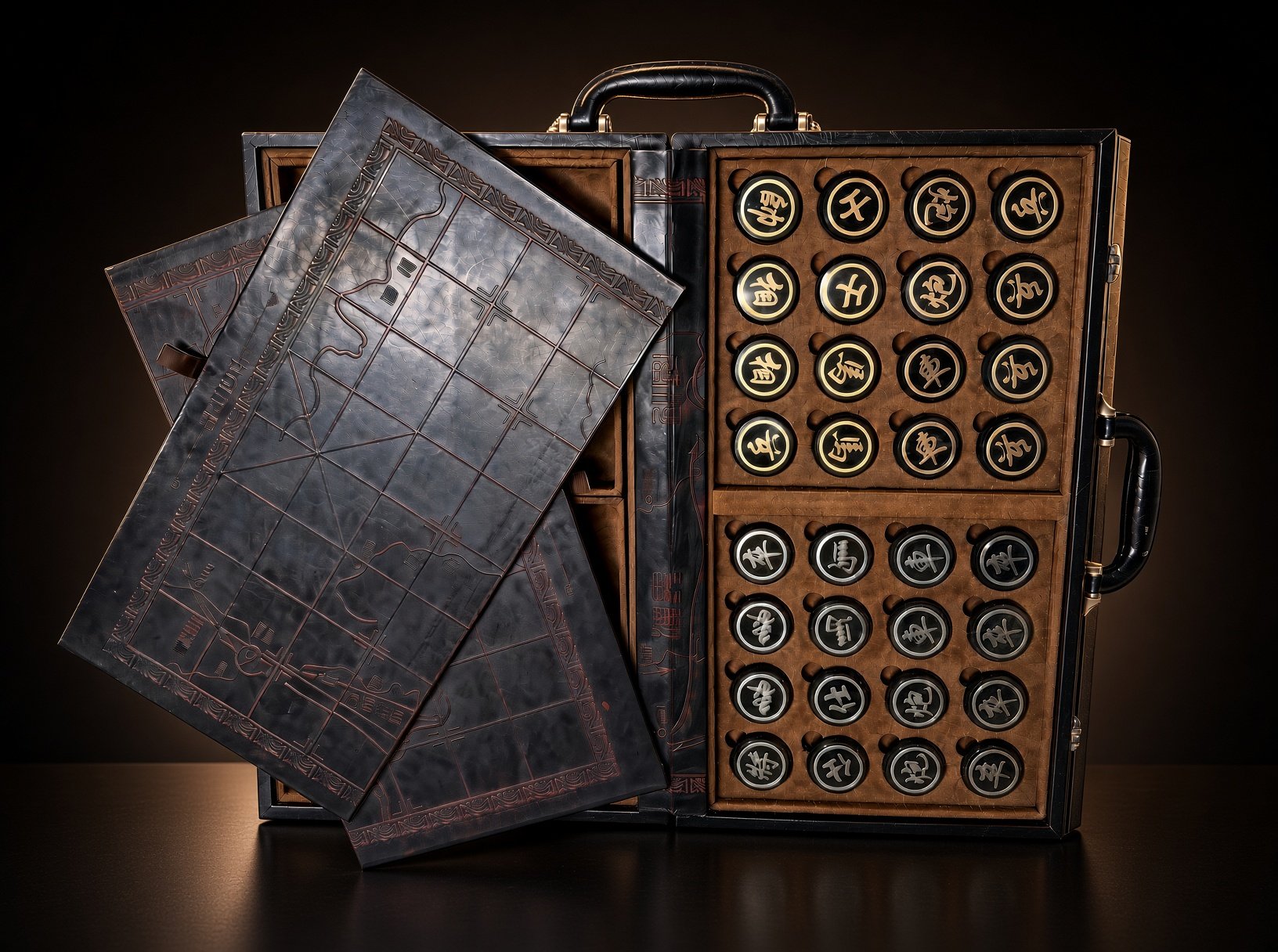
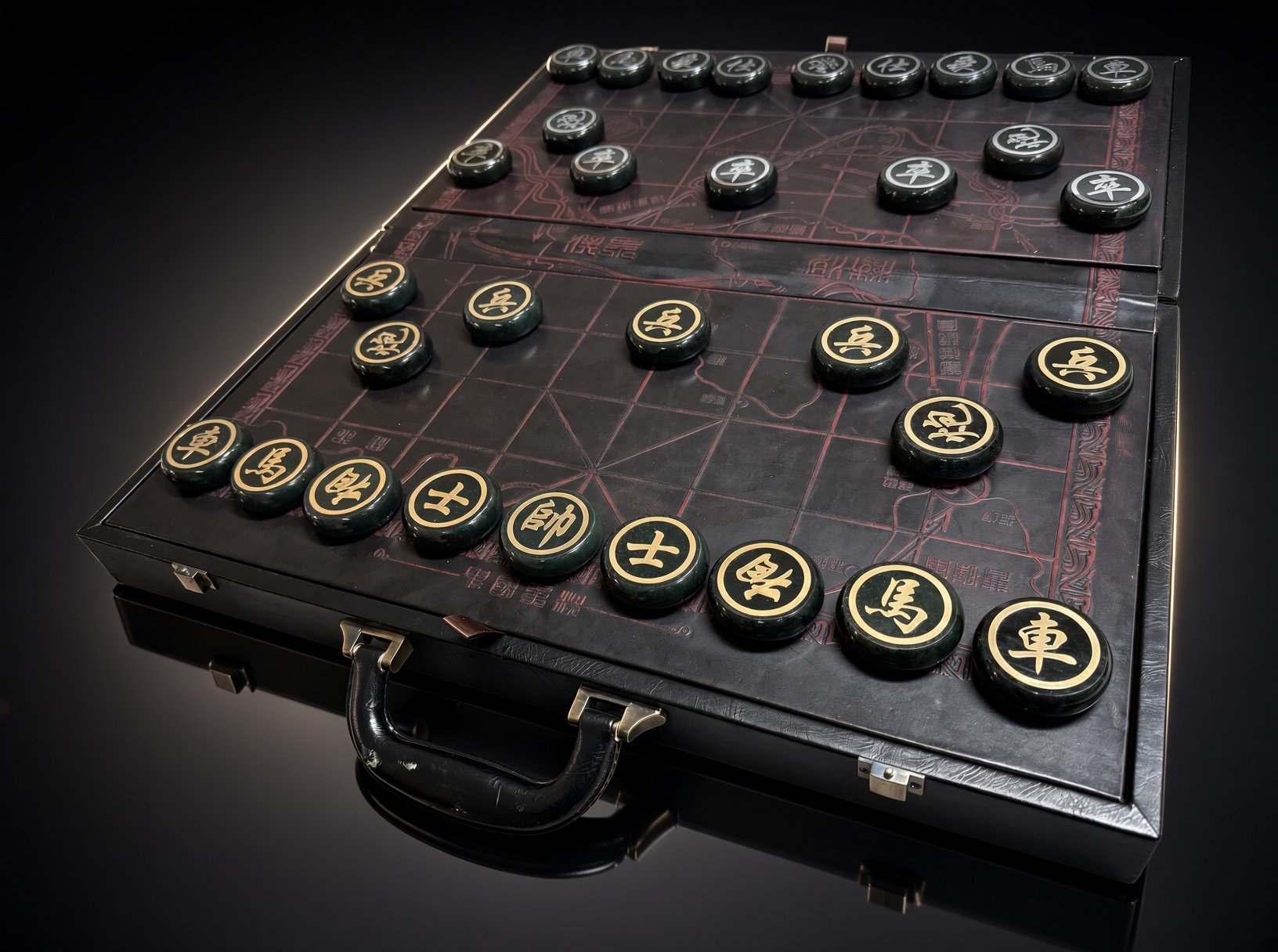
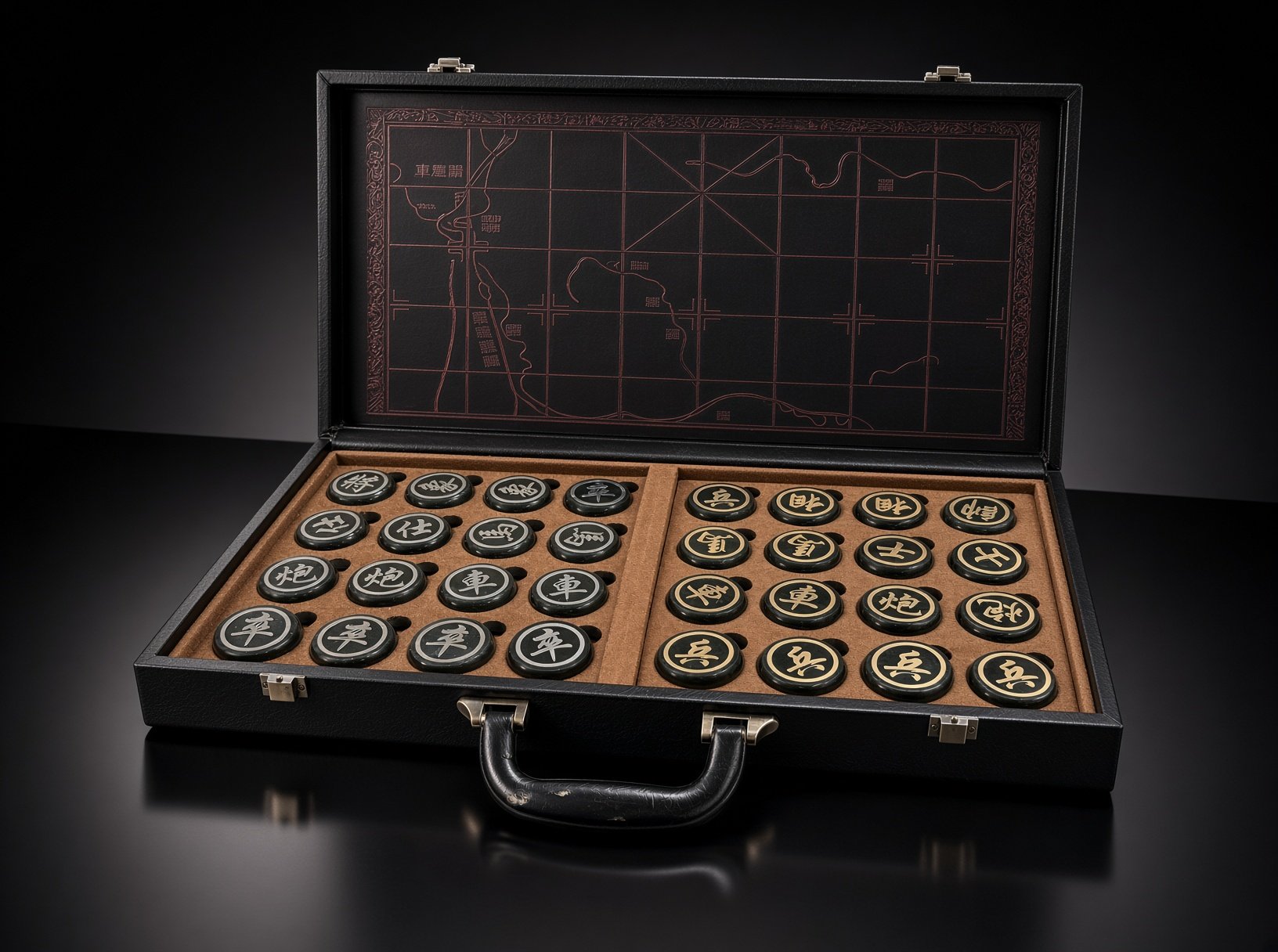
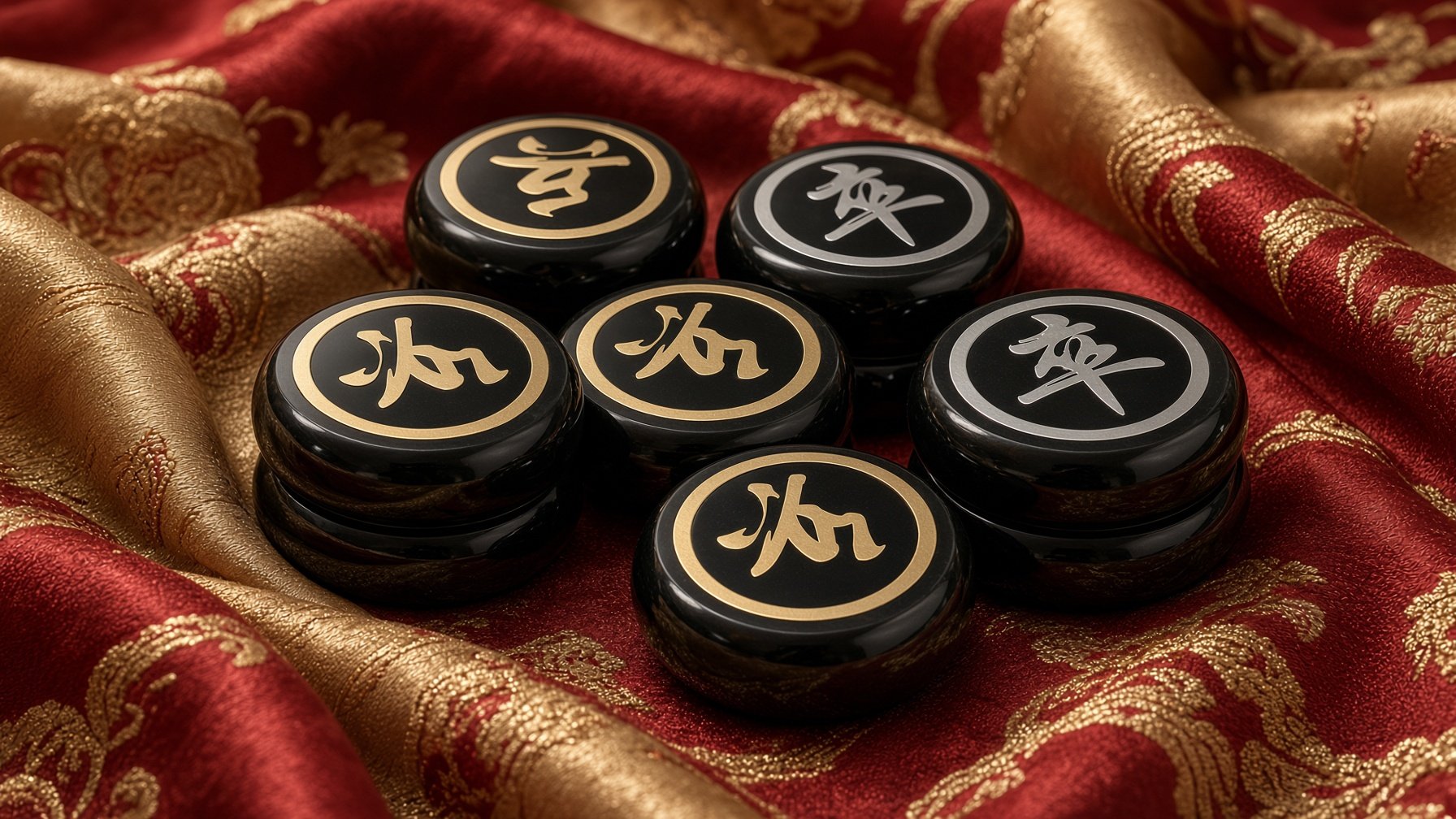
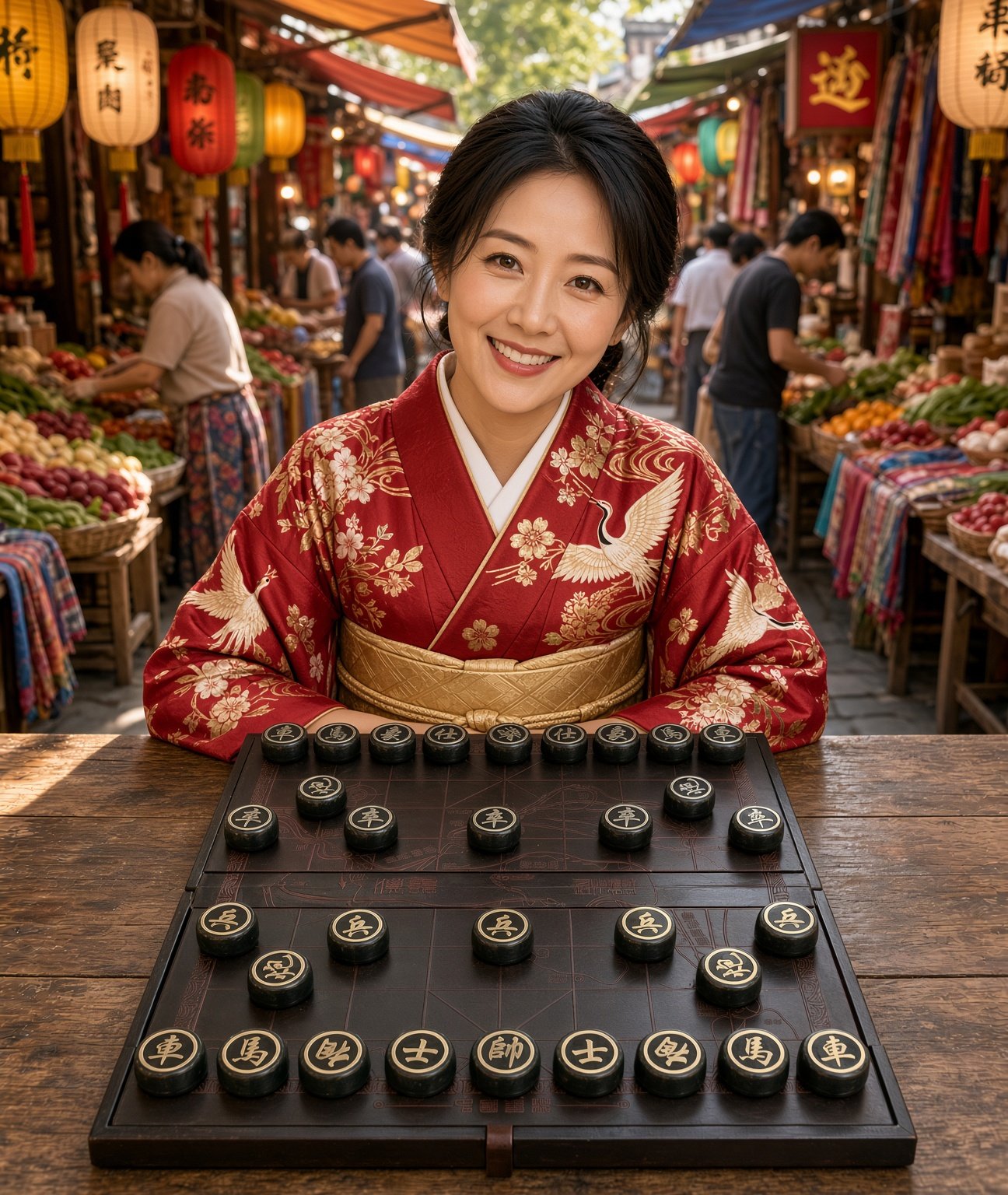
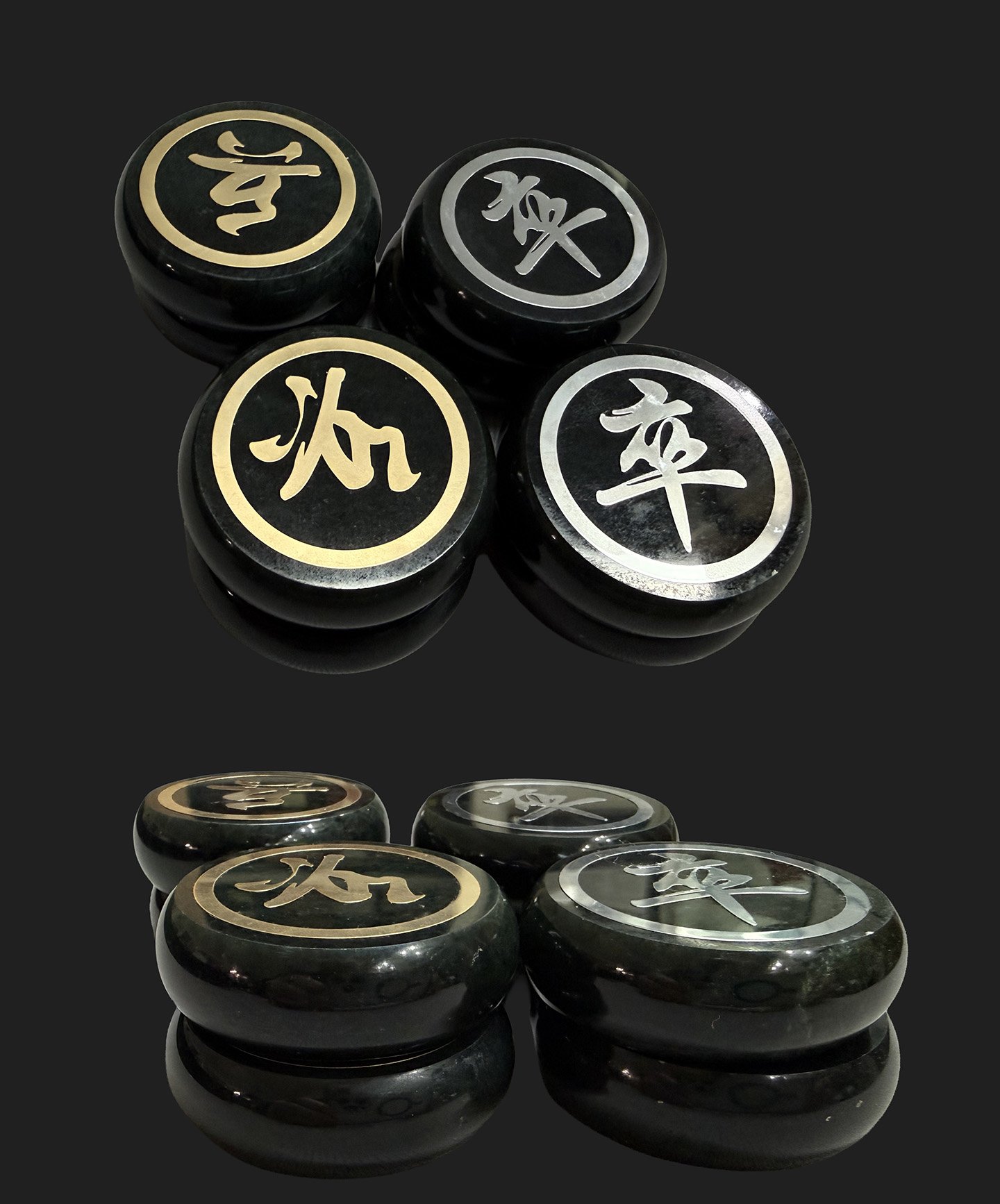
Presented here is a luxury onyx Xiangqi set, also known as Chinese chess. This striking set features 32 substantial barrel-shaped pieces turned from solid black onyx. One side is identified by elegant gold characters; the opposing side carries matching silver characters for clear visual distinction during play.
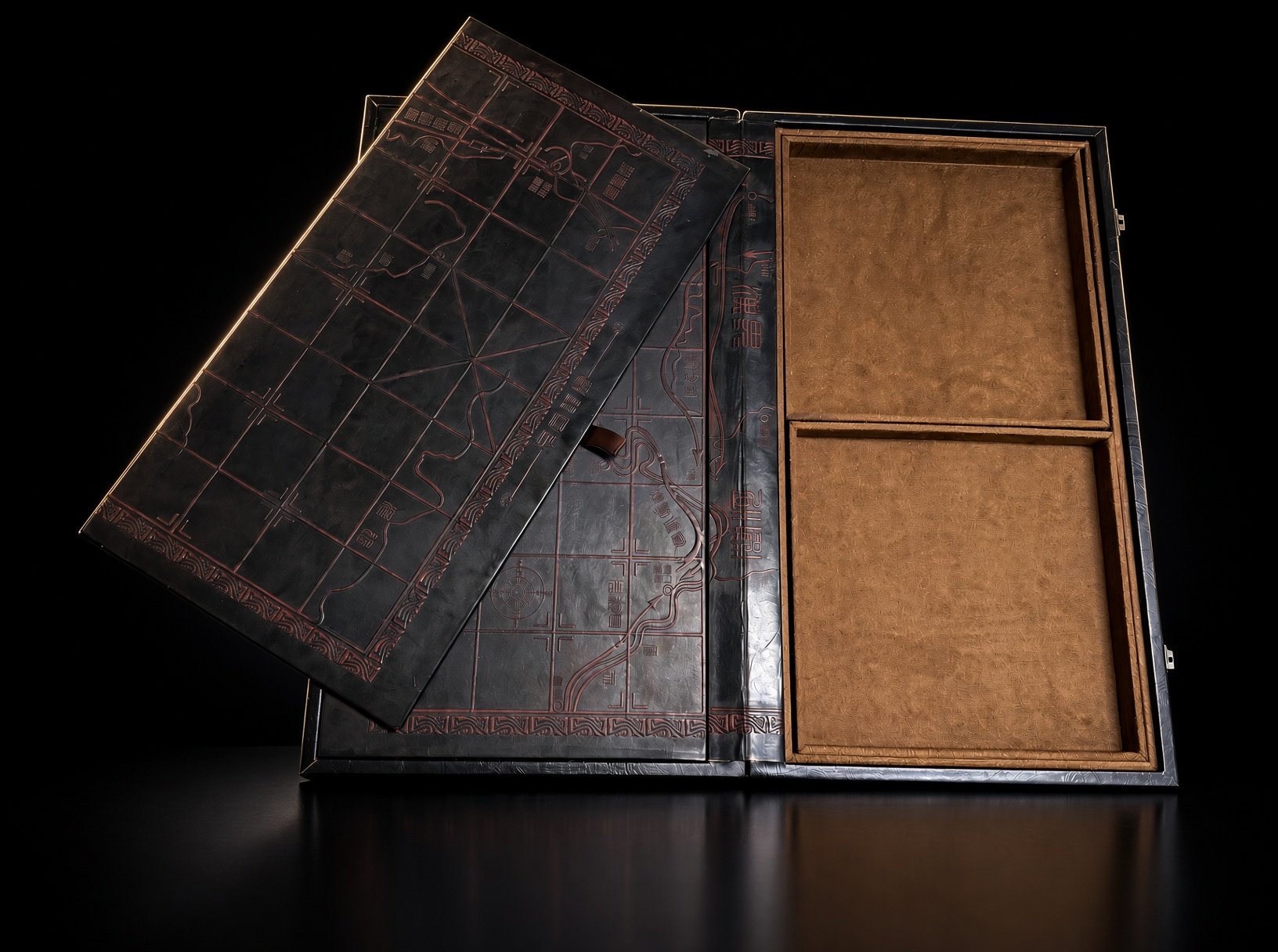
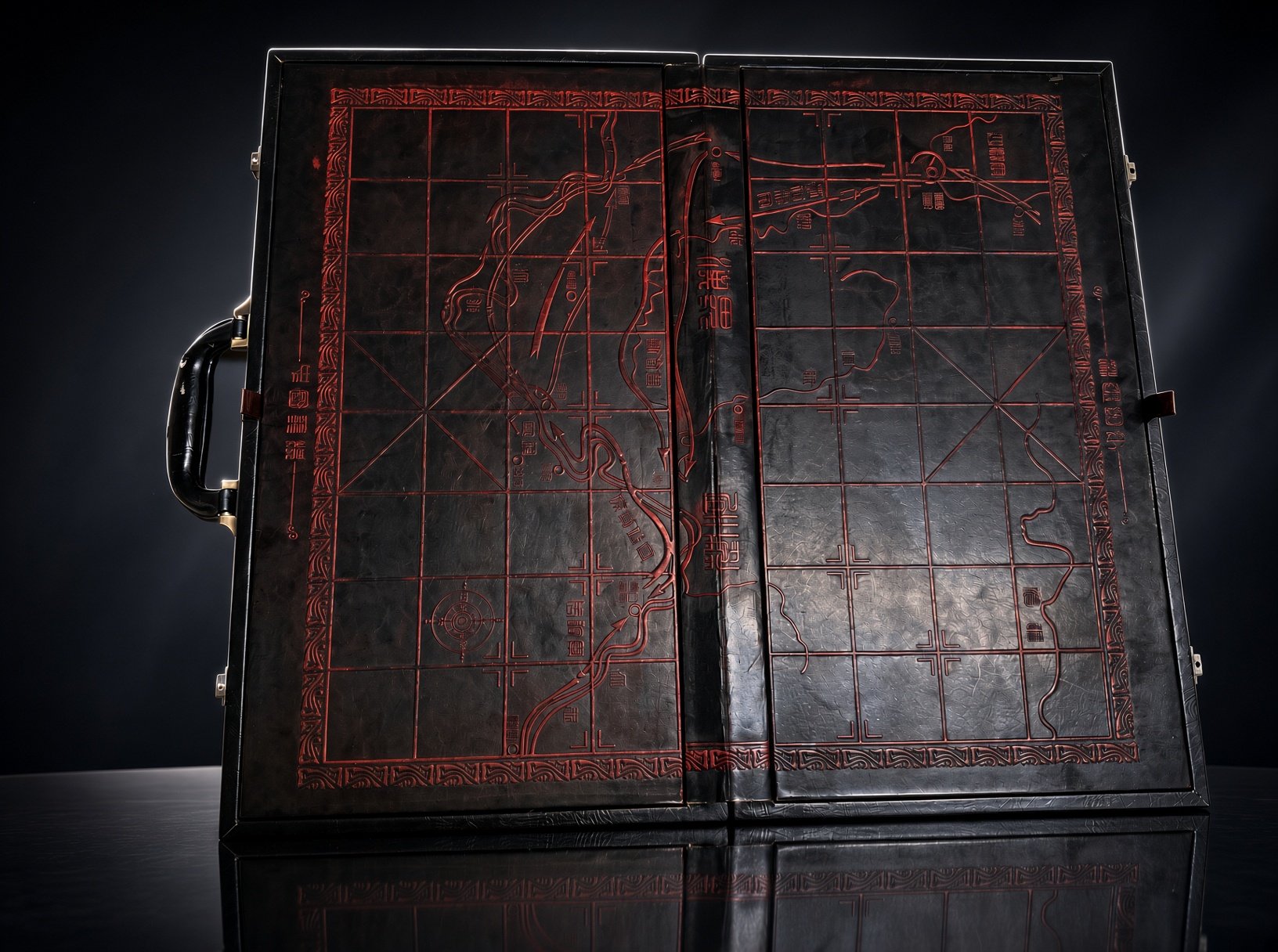
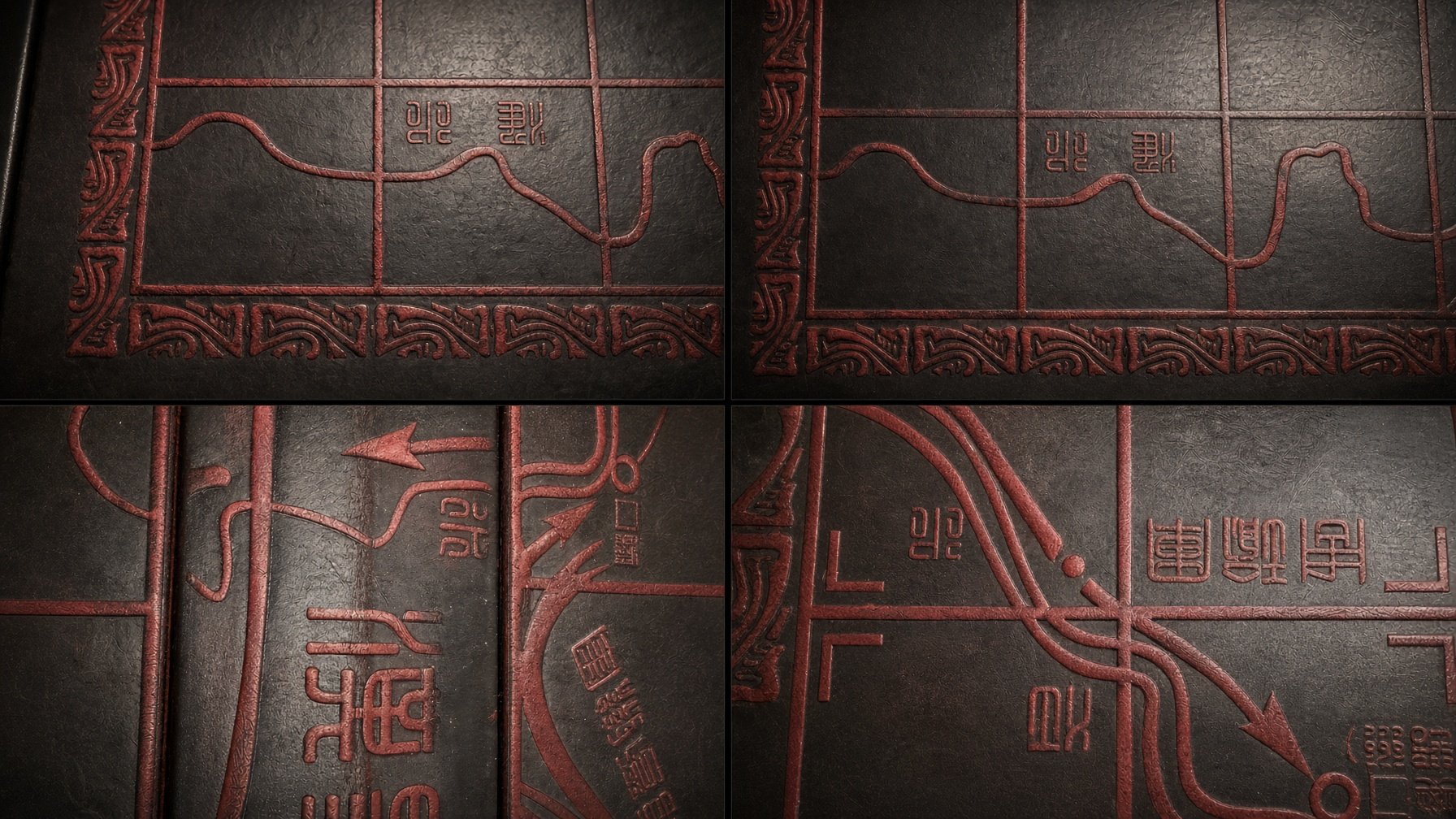
The pieces are exceptionally well finished, with a smooth, polished surface that highlights the natural depth of the onyx. They are presented in a handsome fitted briefcase with raised red embossed panel that opens to reveal both the storage compartments and an integrated Xiangqi board panel with traditional red embossing, including the river and palace markings. Please note that this set is quite heavy.
Key Features:
- 32 turned black onyx Xiangqi pieces
- Pieces identified with gold and silver calligraphy
- Fitted case with integrated Xiangqi board panel
- Traditional red embossing on the board
- Complete and ready to play
- Luxury collectible quality
Background
Xiangqi is also known as Chinese chess. It is one of the oldest forms of chess and one of the most popular board games in China. It is related to Western Chess, Chaturanga, Shogi, Indian chess and Janggi. There are several differences between Xiangqi and Western Chess. The most significant are the new piece, the Cannon (pao), which must have a “screen” to capture; a rule forbidding the Kings (or Generals) from directly opposing each other; the ability to block the Knight, Pawn promotion; the river, which the Elephants can’t cross; and the Fortress or Palace, which confines the King and his advisors (Visors).
The battlefield is composed of 9 vertical lines (files) and 10 horizontal lines (ranks) with the pieces being played on the intersections. On the center of each edge of the board is the fortress or palace, which is 3 by 3 lines (9 points) with four diagonal lines that extend outward from the center forming an “X” shape. Dividing the two opposing sides of the board is a river, located between the fifth and sixth ranks. The river is often marked with the Chinese characters, 楚河 “Chǔ Hé” meaning “Chu River”, and 漢界 (汉界 in simplified Chinese), “Hàn Jiè”, meaning “Han border”, a reference to the Chu-Han War. Some boards have the starting points of soldiers marked with symbols.